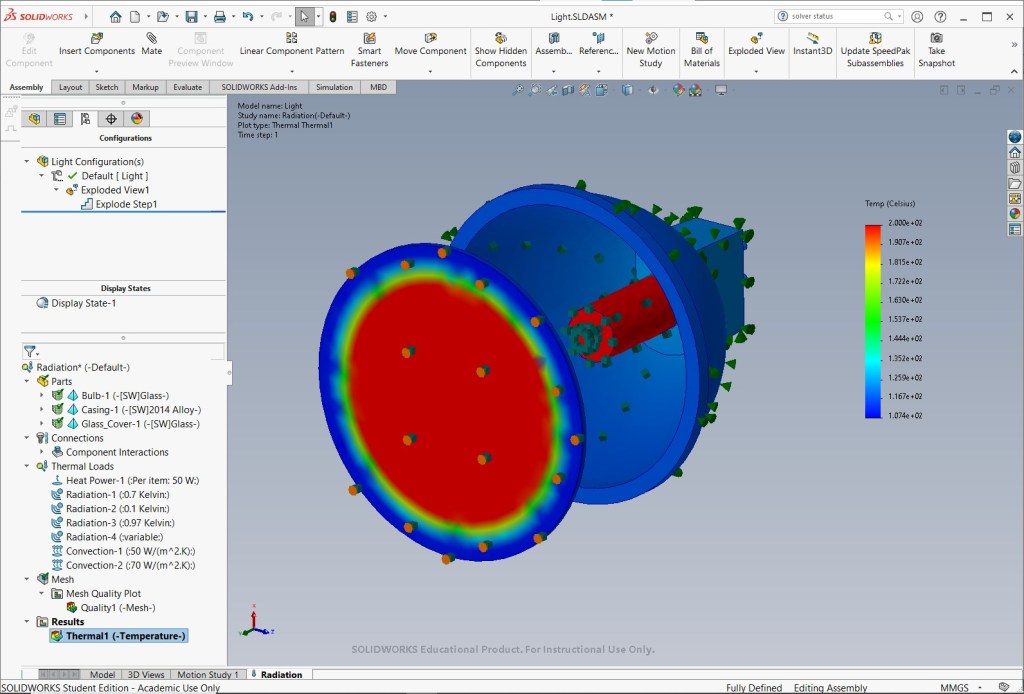
The concept of thermal analysis involves accurately simulating how heat energy transfers through a component or system by modeling at least one of the three primary mechanisms (conduction, convection, and radiation) to predict temperature distribution and heat flux throughout the model.
In this example, we’ll simulate conduction and radiation on a light fixture to determine how heat builds up and distributes across its components, and whether the design can withstand operating temperatures.

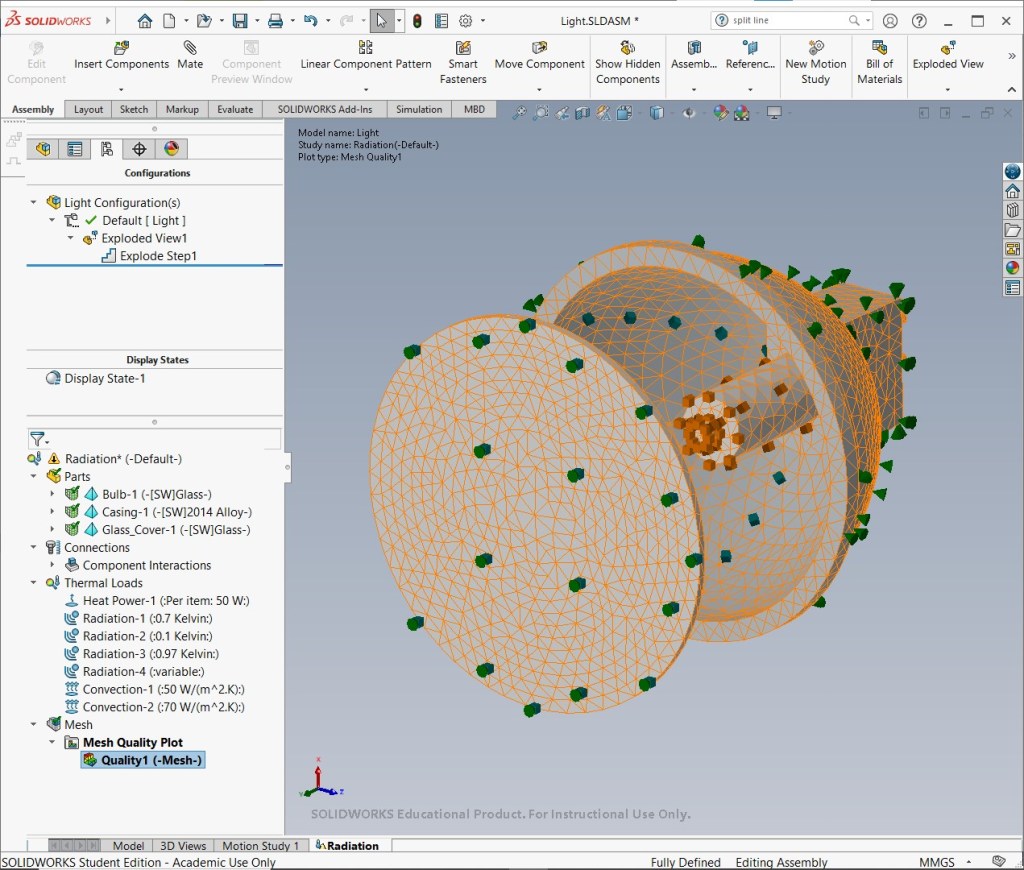
Mesh plot
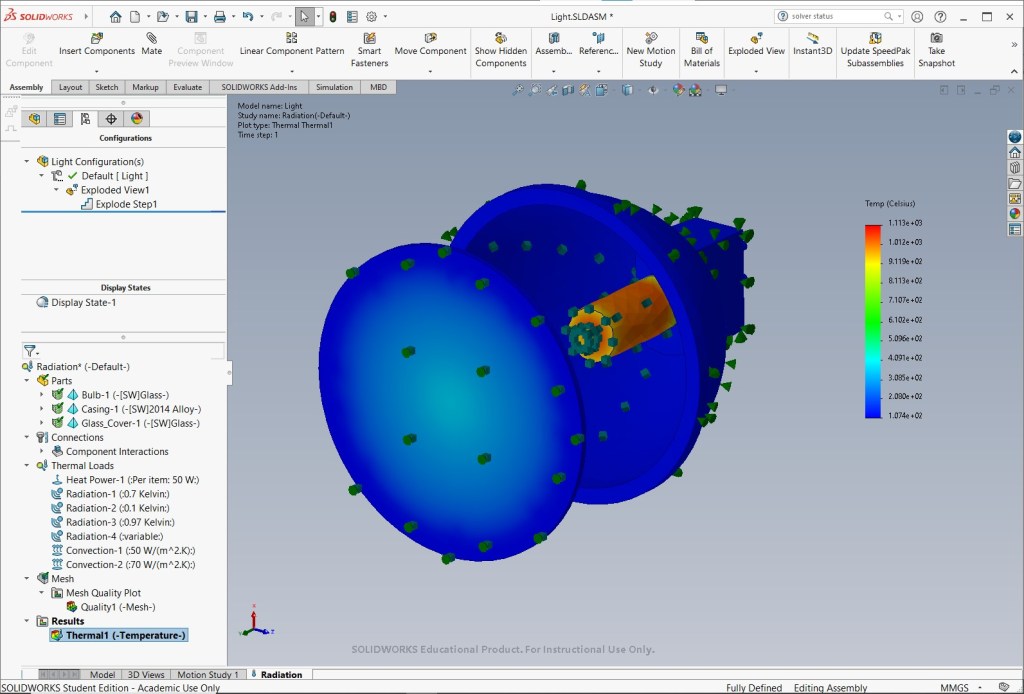
Thermal plot: temperature
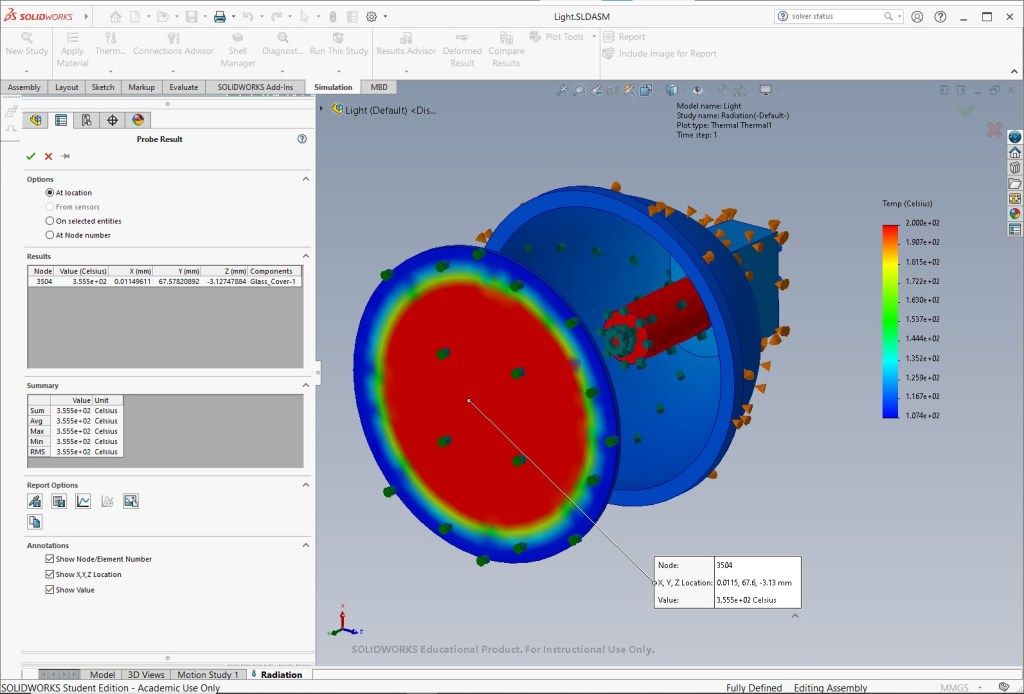
The probe result of 355 °C is well above the maximum allowable design limit of 200 °C, indicating that the light fixture will likely require significant design modifications—such as reducing bulb power or improving heat dissipation.
Thermal plot: heat flux
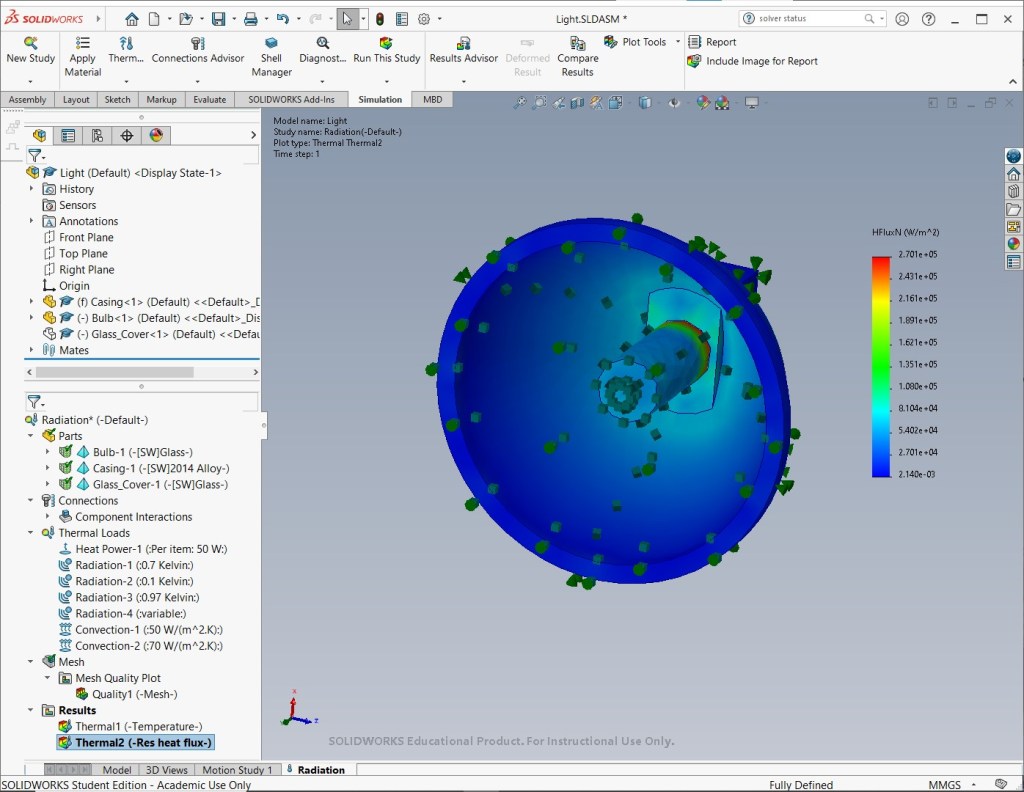
Heat flux is the rate and direction of heat energy flow through the object, which is similar to stress in structural analysis. The plot shows the highest heat flux originating from the bulb and inner casing, highlighting where thermal management is most needed. The high values at the re-entrant edges are typically unreliable hot spots (singularities) and should be disregarded.
Source
- MySolidWorks Training
- Learning Path: SW Simulations
This content (including the analysis setup, simulation execution, and all resulting visual content—screenshots and videos) was individually performed and generated by me in SolidWorks Simulation, utilizing a combination of custom and existing parts provided by SolidWorks as guided by the MySolidWorks Training curriculum.

