The submodeling technique is a refined analysis method used in finite element analysis (FEA) to accurately determine localized stress and displacement in a small, critical region of a larger structure.
- Objective: The primary goal is to obtain accurate, high-resolution results for a specific area of interest (the submodel) without having to use an extremely fine mesh across the entire, larger parent model, thus saving significant computational time and resources.
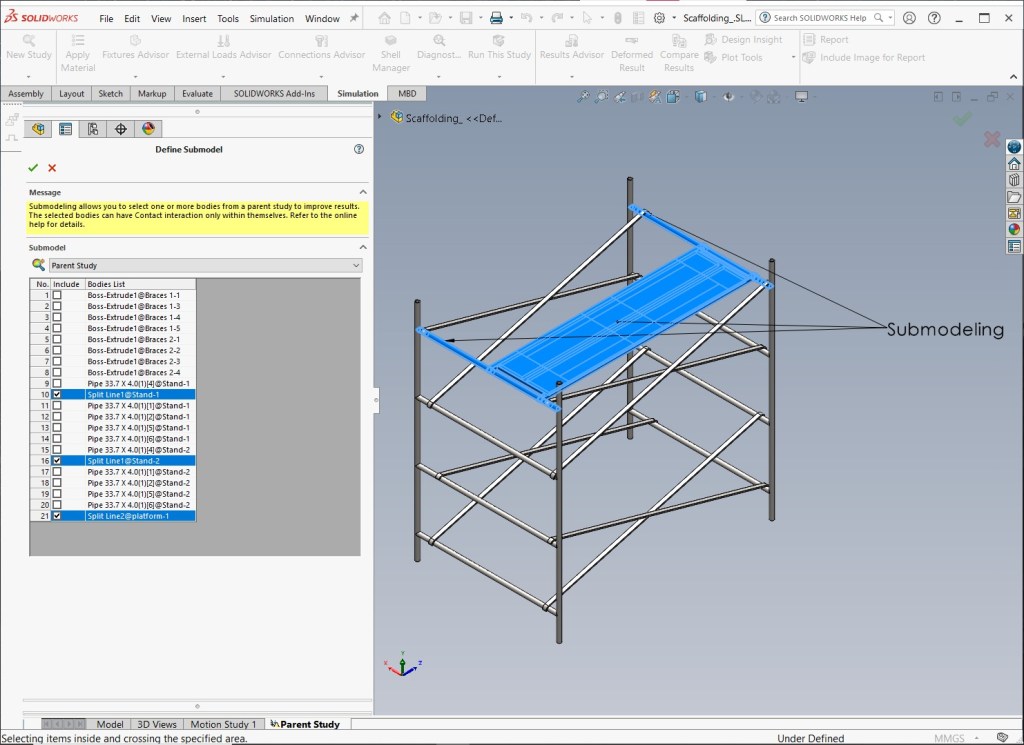
- Procedure: A submodel study is created directly from the completed parent study. This isolates the region of interest.
- Load transfer: The displacements calculated from the parent study at the boundary of the submodel automatically transfer to the boundary of the submodel study, effectively applying the correct load conditions without manual effort.
- Efficiency: This approach allows for the use of a coarser mesh on the initial global model for general displacement and low-stress calculations, followed by a highly refined mesh only on the critical area to maintain accuracy.
This example uses the submodeling technique on a scaffolding assembly loaded with the weight of two people and gravity. An initial, coarse parent study is run on the full structure, and a submodel study is then created for a critical, high-stress joint to obtain accurate, high-resolution stress results with a refined mesh.
Parent study
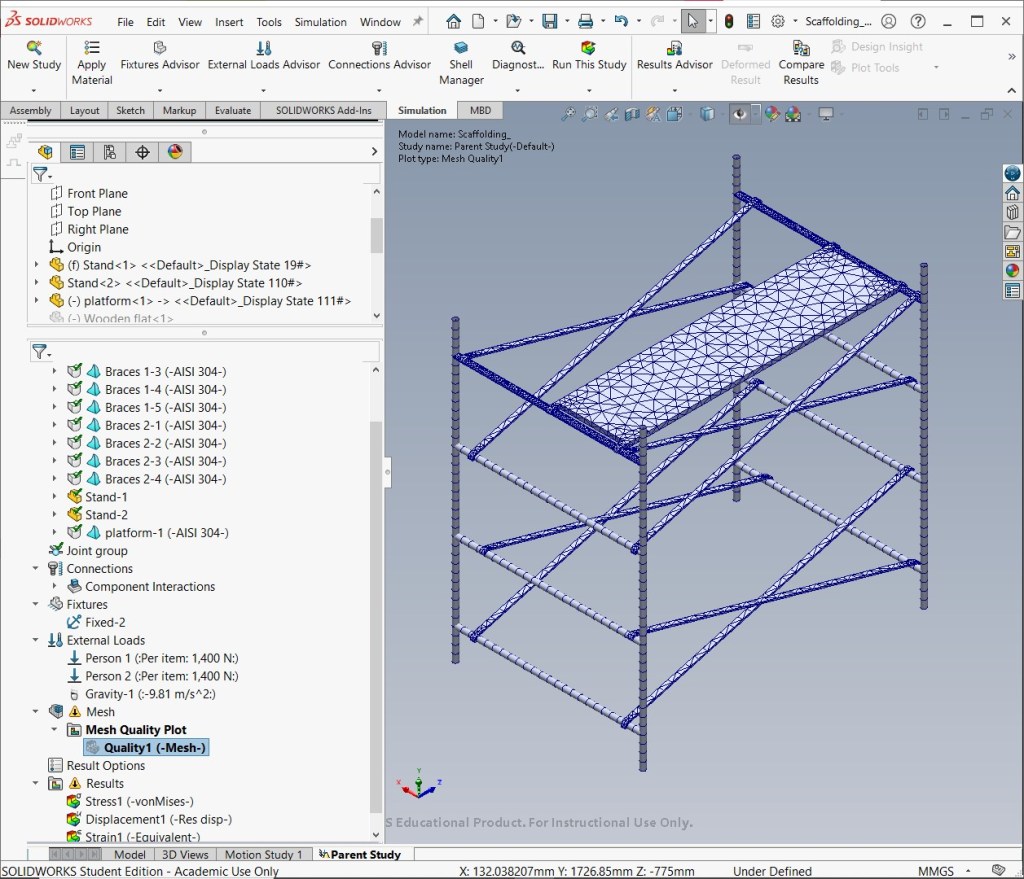
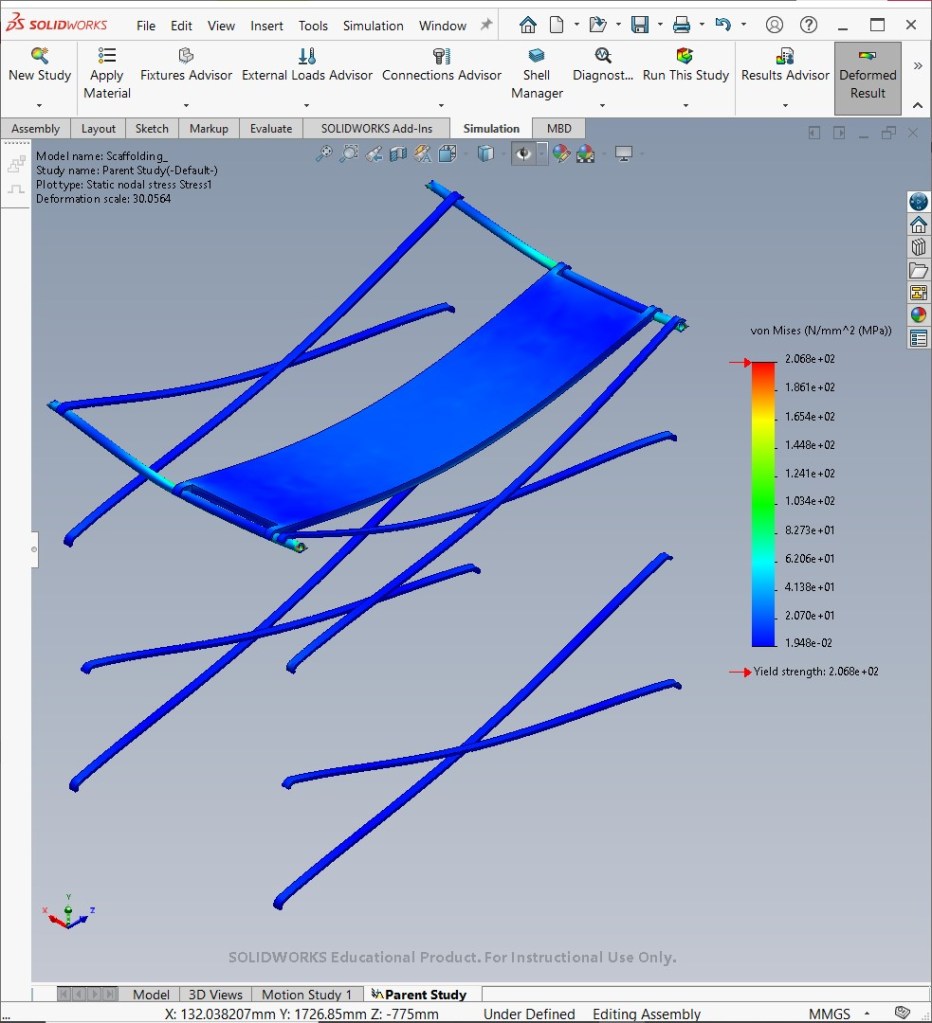
Submodel
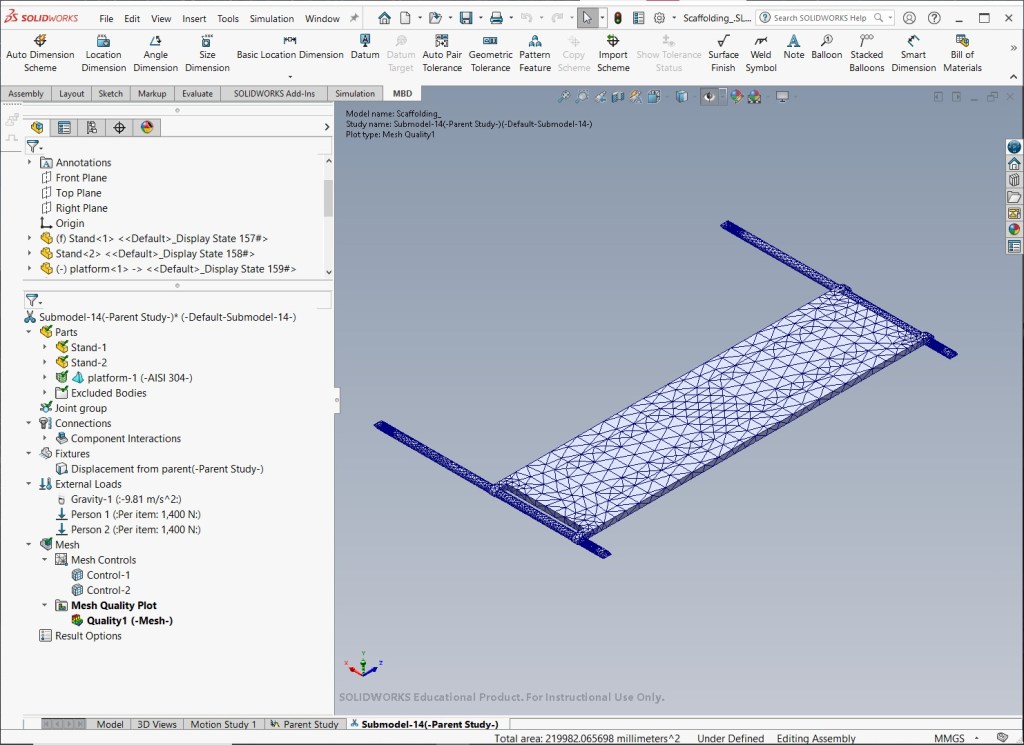
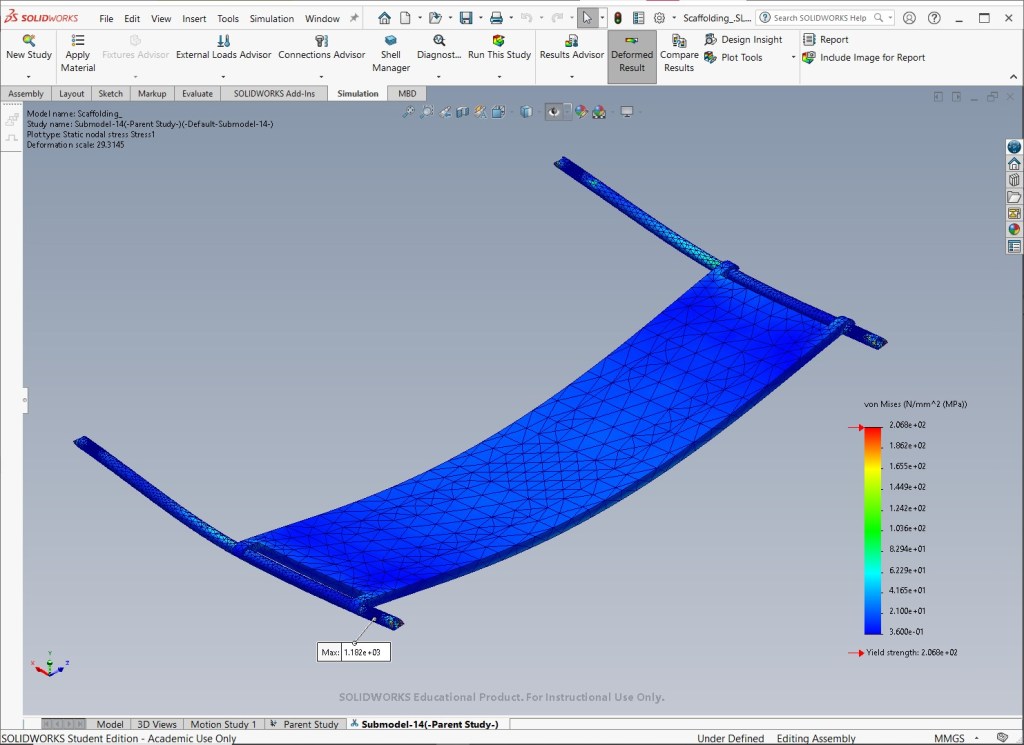
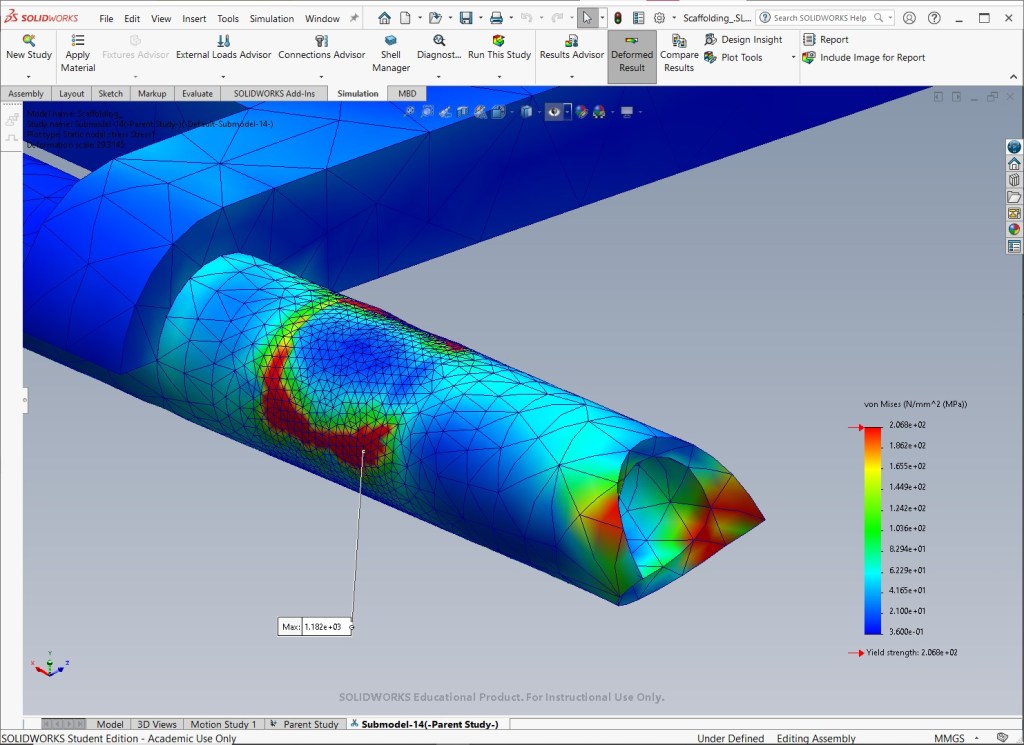

The energy norm error is a reliability metric in FEA that highlights areas where the mesh is too coarse, causing inaccurate stress results. Engineers use it to find the least accurate regions of the parent model, which precisely pinpoints the best location for a more refined submodel study.
Source
- MySolidWorks Training
- Learning Path: SW Simulations
This content (including the analysis setup, simulation execution, and all resulting visual content—screenshots and videos) was individually performed and generated by me in SolidWorks Simulation, utilizing a combination of custom and existing parts provided by SolidWorks as guided by the MySolidWorks Training curriculum.

