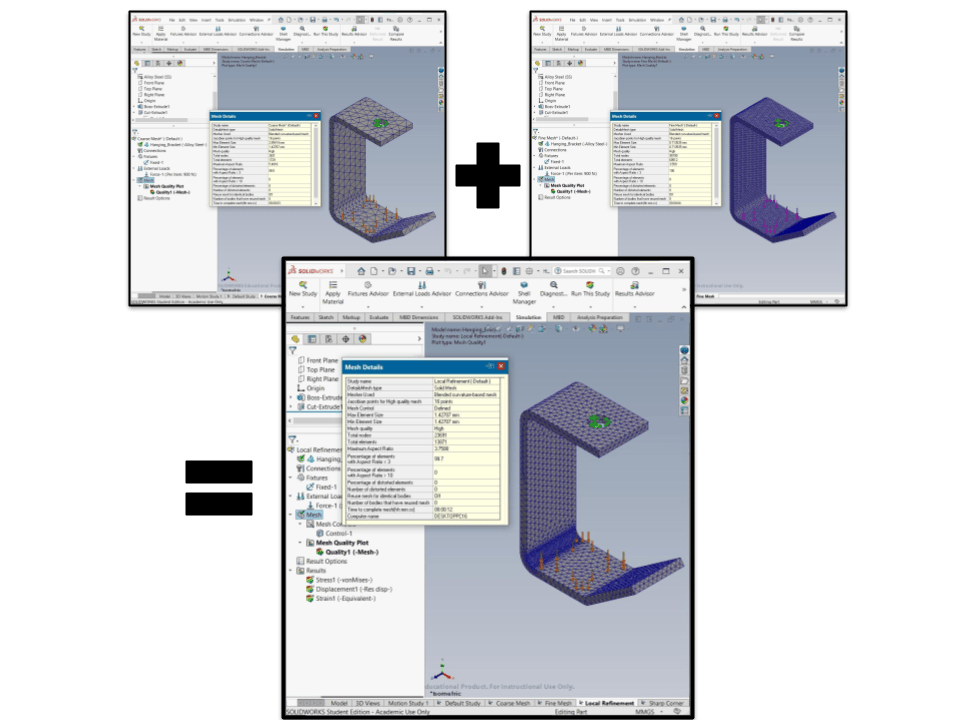
Mesh convergence is a foundational concept in finite element analysis (FEA), describing the process of refining the mesh until the key results (like stress or displacement) stabilize and are considered accurate.
Mesh control is the specialized tool used to manually adjust element size in specific, critical regions of a model, allowing for accurate results without the immense computational cost of using a fine mesh everywhere.
This lesson uses a static analysis on a simple hanging bracket (made of alloy steel) to illustrate how varying the mesh size and applying local mesh controls impacts result accuracy and computation time.
Mesh sizes
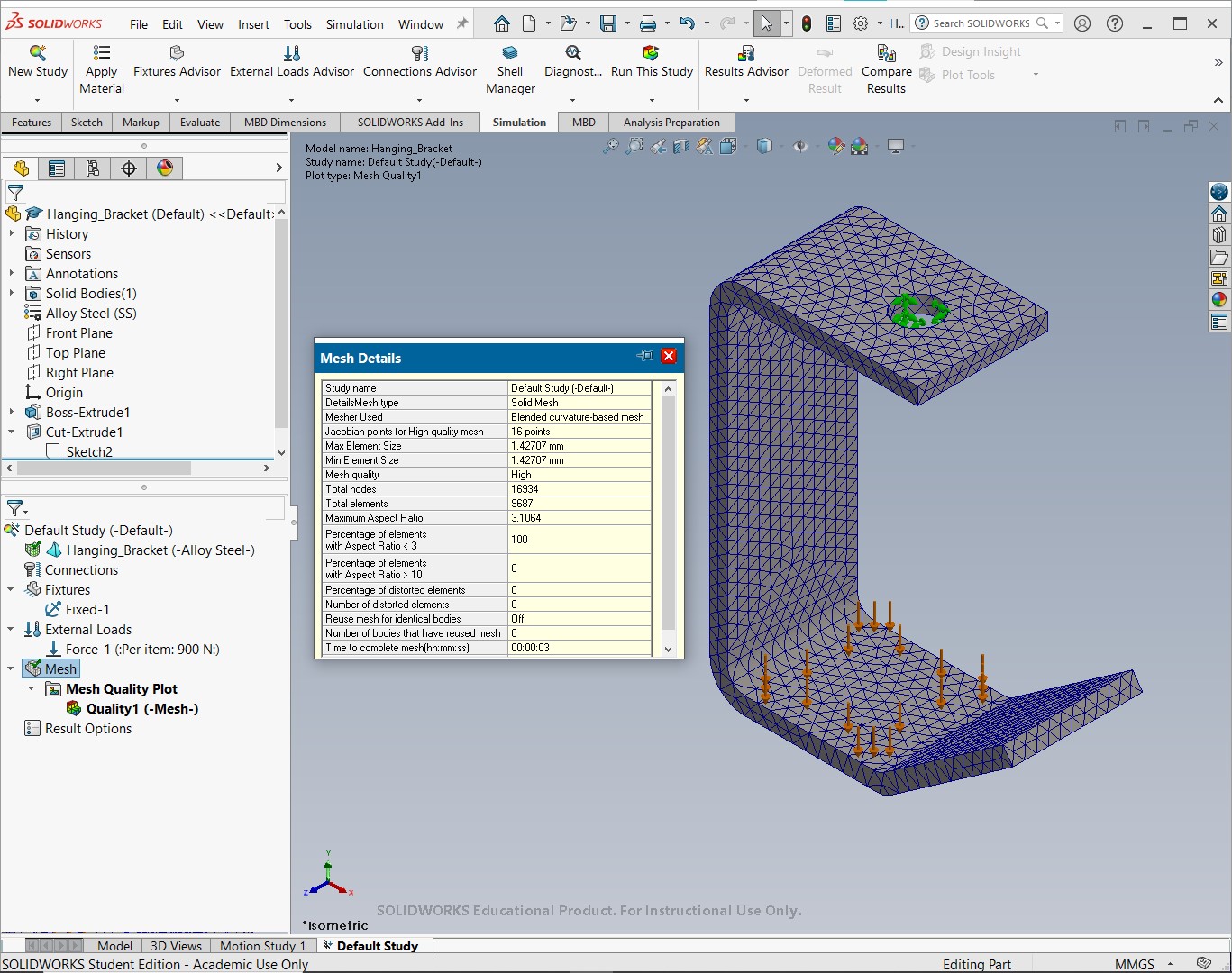
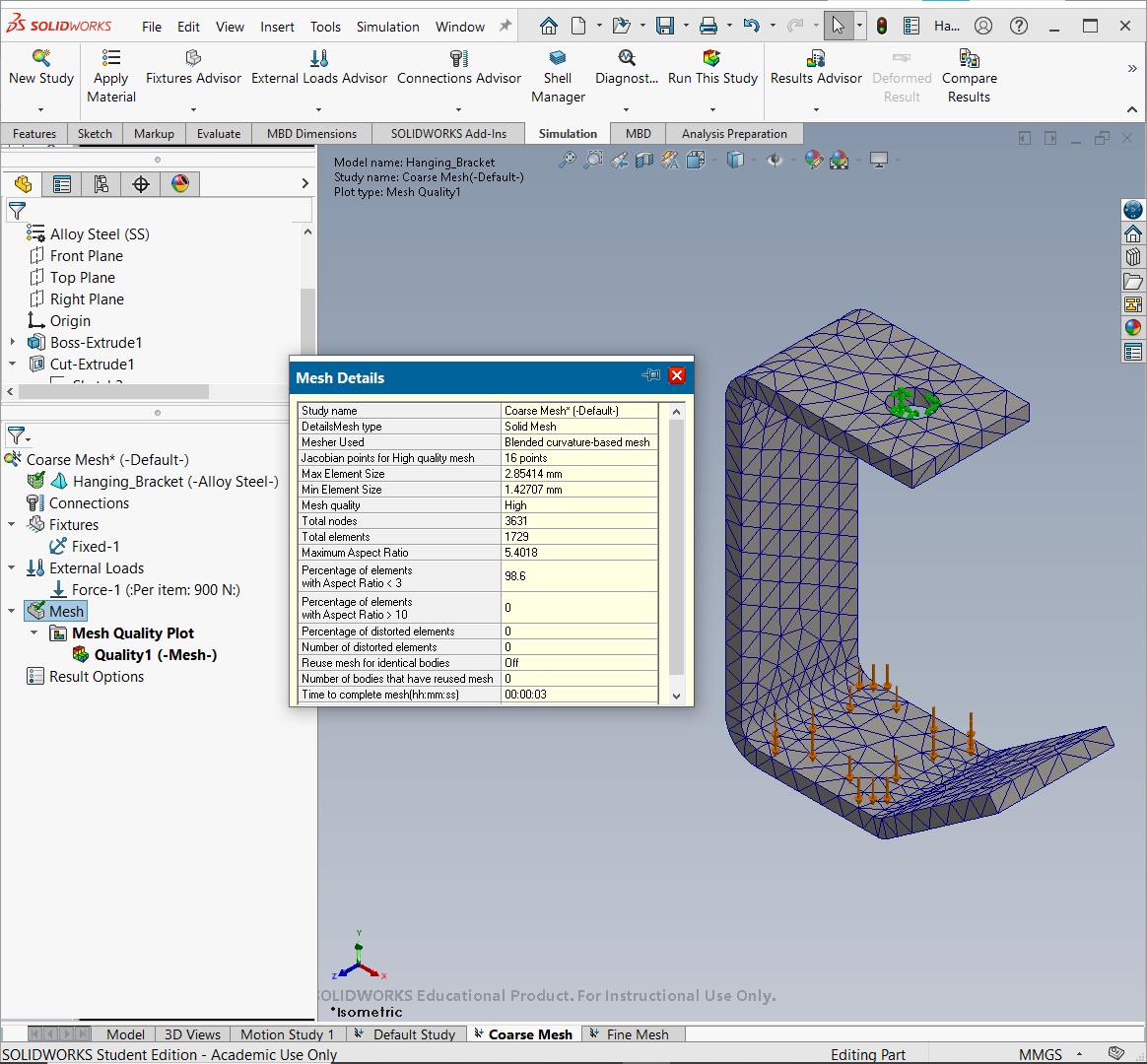
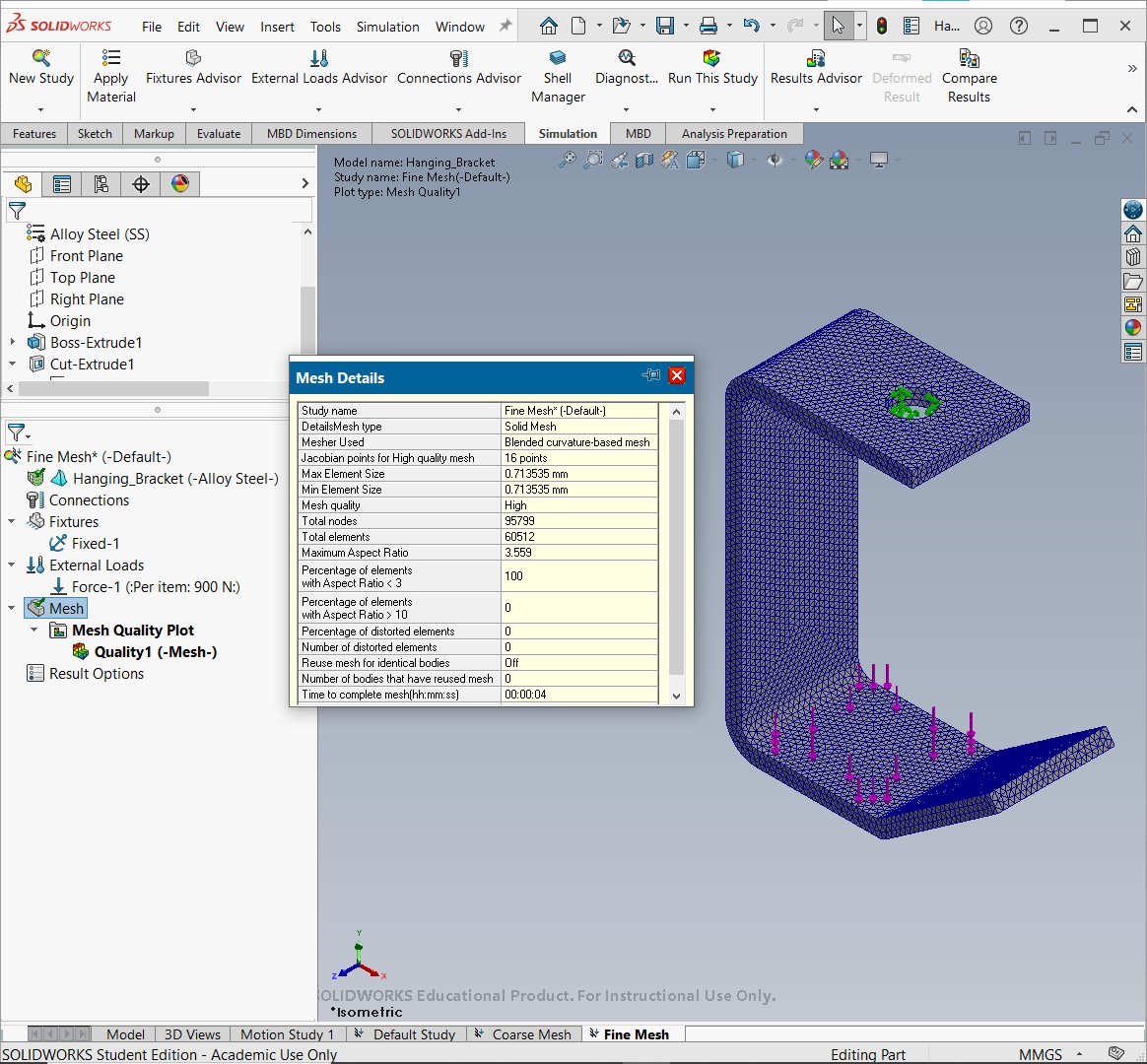
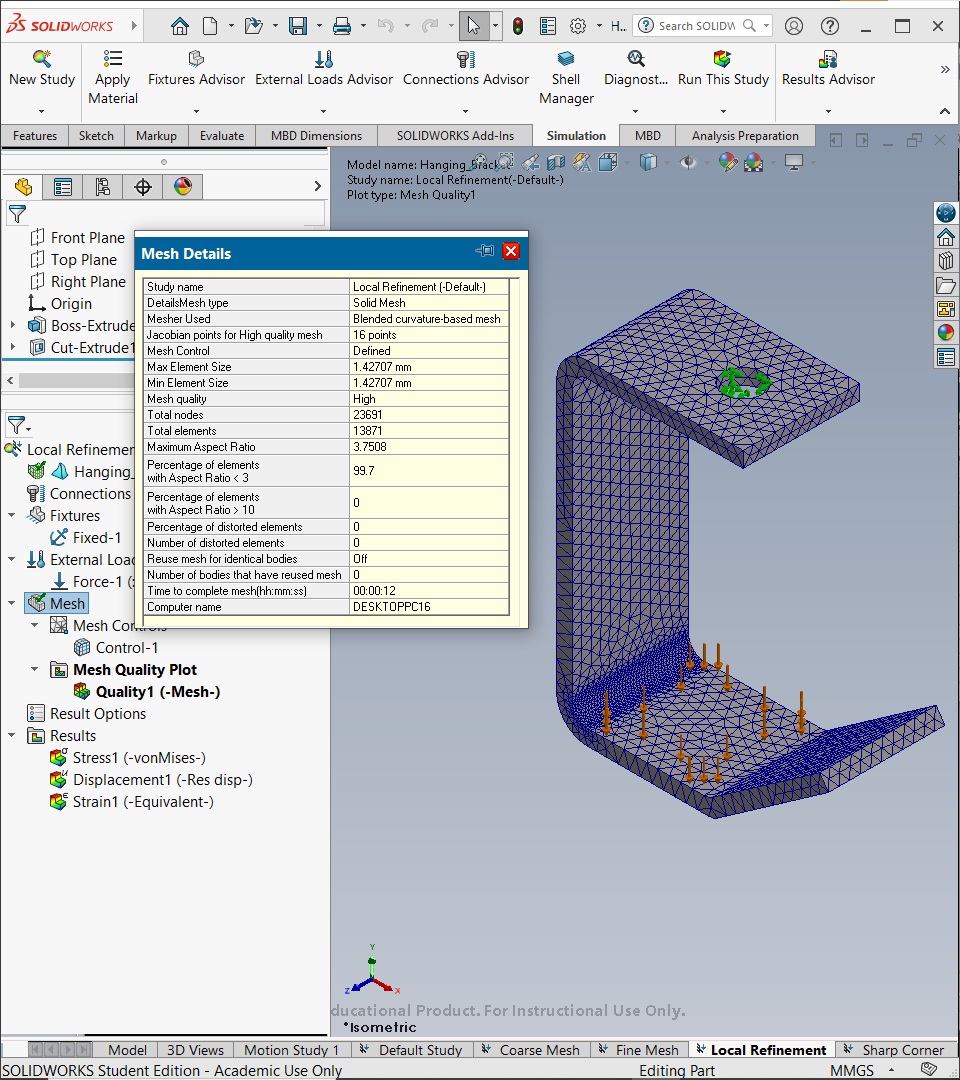
This slideshow illustrates how different mesh sizes affect the number of elements and the estimated time to generate a mesh plot.
| Mesh size | Number of elements | Meshing time |
|---|---|---|
| Default | 9,687 | 3 seconds |
| Coarse | 1,729 | 3 seconds |
| Fine | 60,512 | 4 seconds |
| Local refinement | 13,871 | 12 seconds |
Even though the local refinement study has fewer elements, its meshing time was the longest because the local control created elements about half the size of those in the fine mesh study. However, the solution time (calculating stress, strain, and displacement) will make up for the longer meshing time, as we’ll discover shortly.
Accuracy of stress results
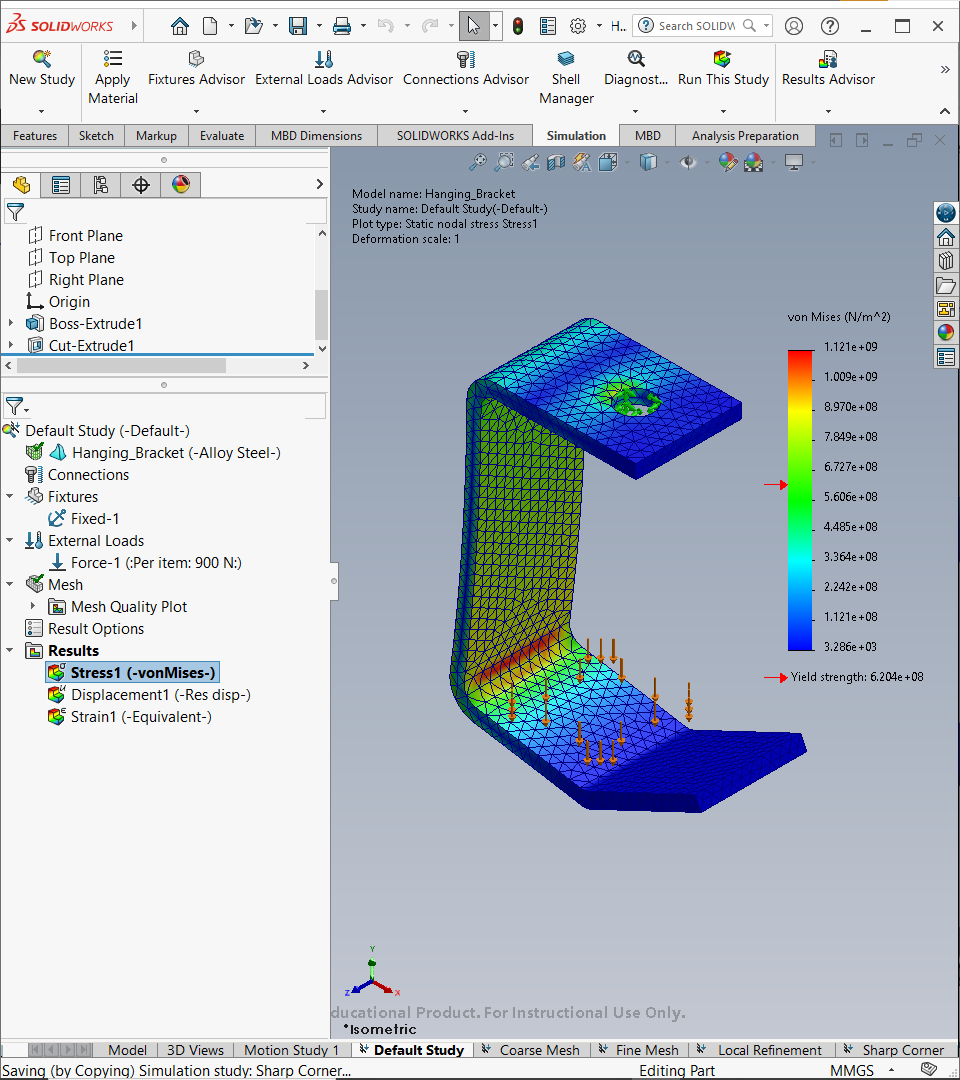
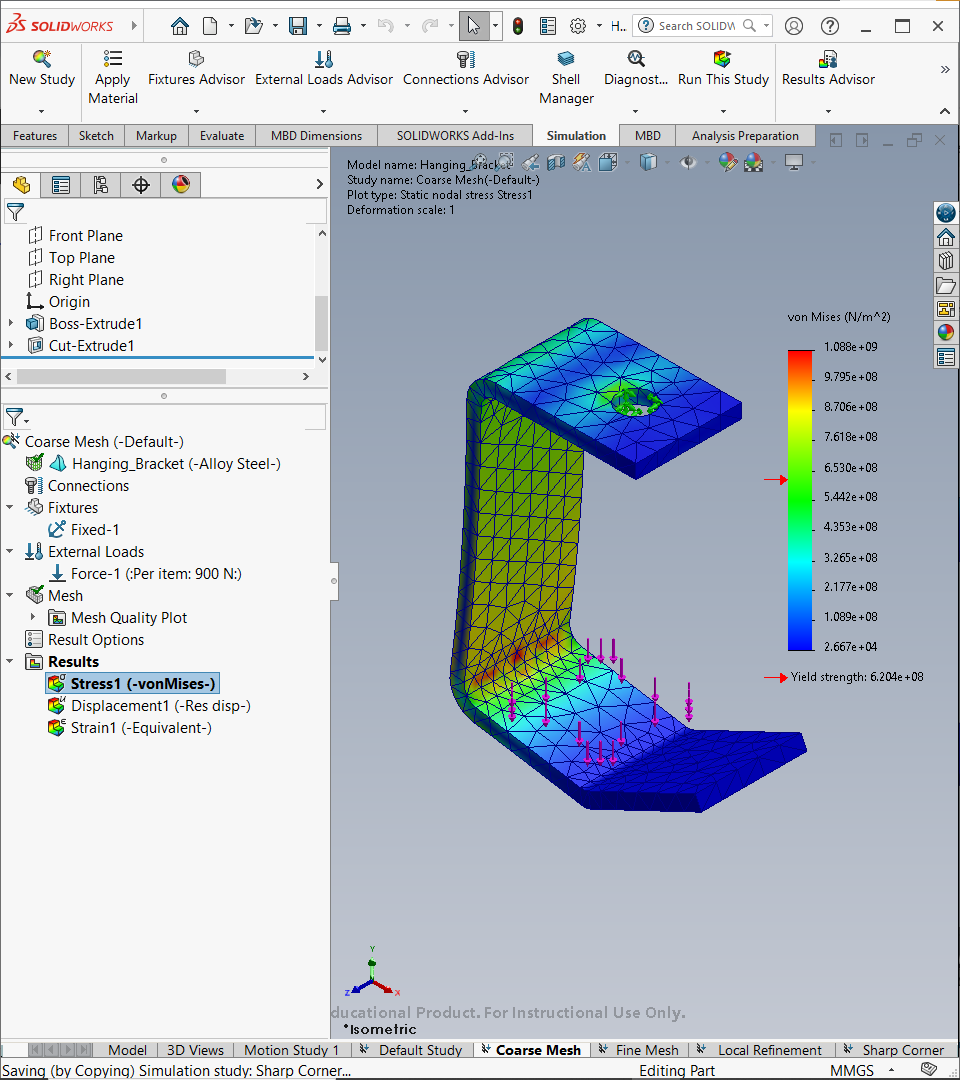
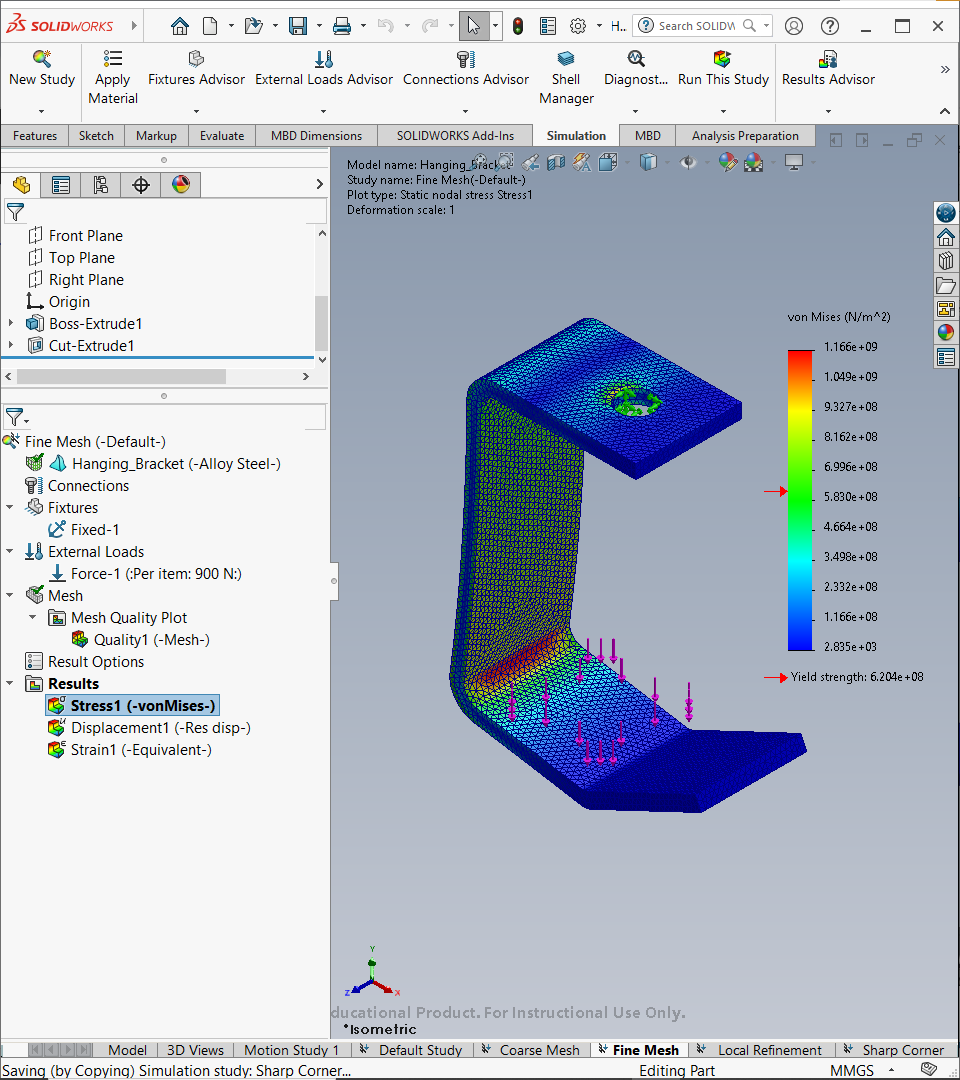
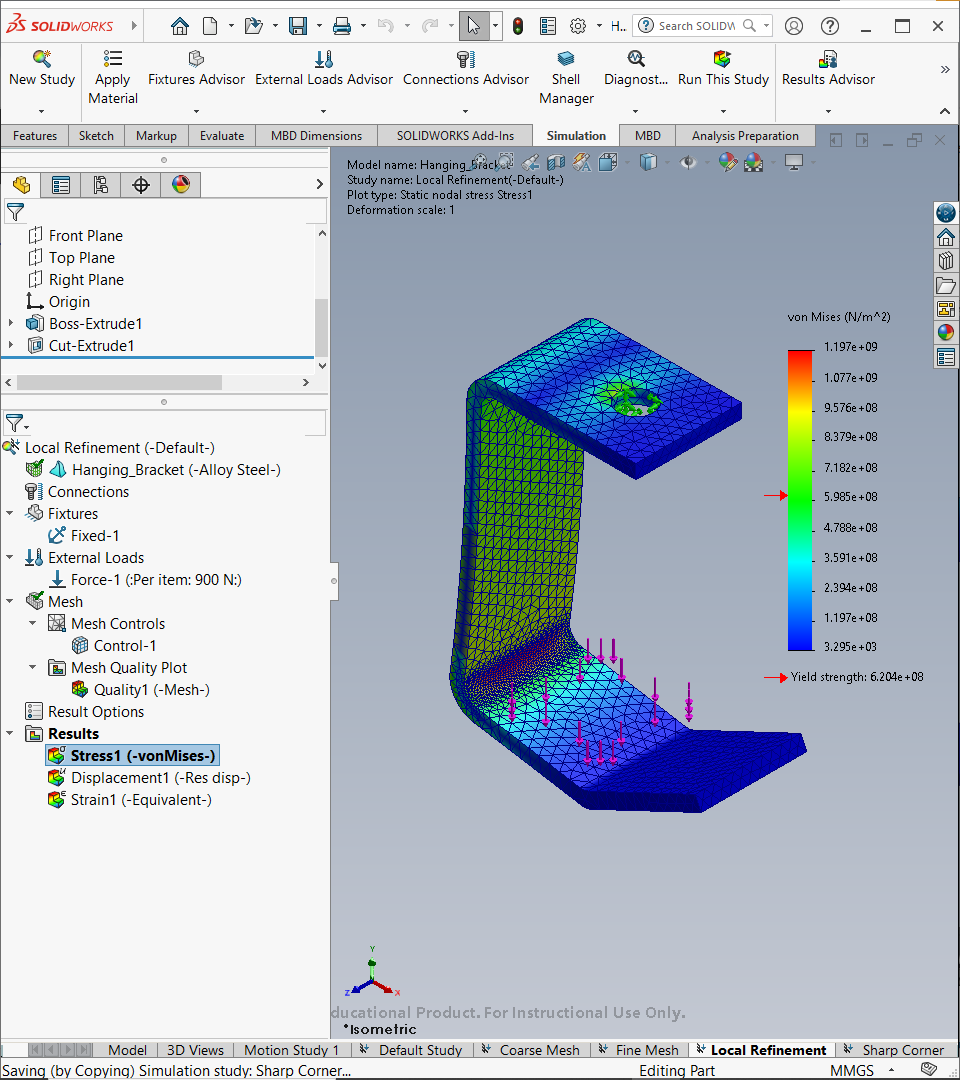
| Mesh size | Maximum stress |
|---|---|
| Default | 1,121 MPa |
| Coarse | 1,088 MPa |
| Fine | 1,166 MPa |
| Local refinement | 1,197 MPa |
The above table is an example of mesh convergence (finer meshes provide greater accuracy). The local refinement study delivers the highest maximum stress, indicating it has most successfully converged on the final, accurate solution by precisely meshing the critical fillet area.
Accuracy of displacement results
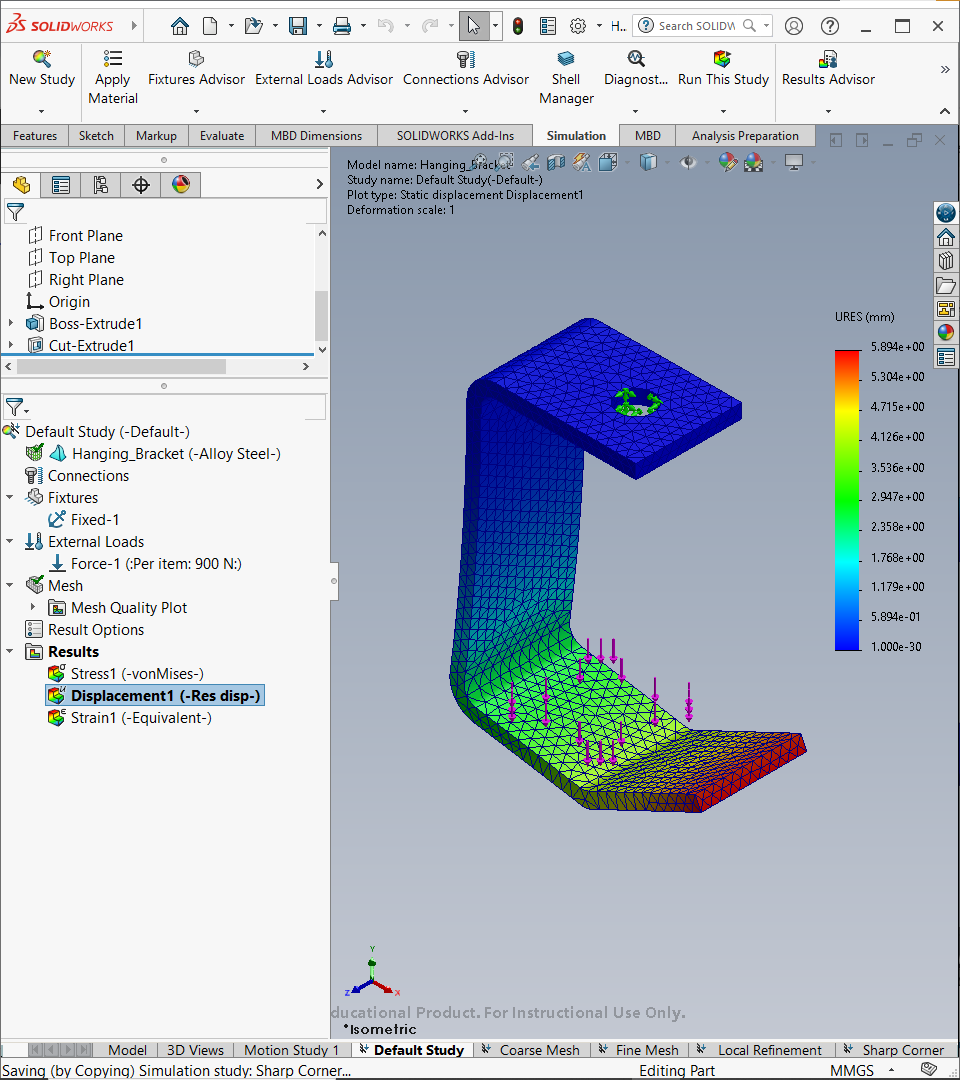
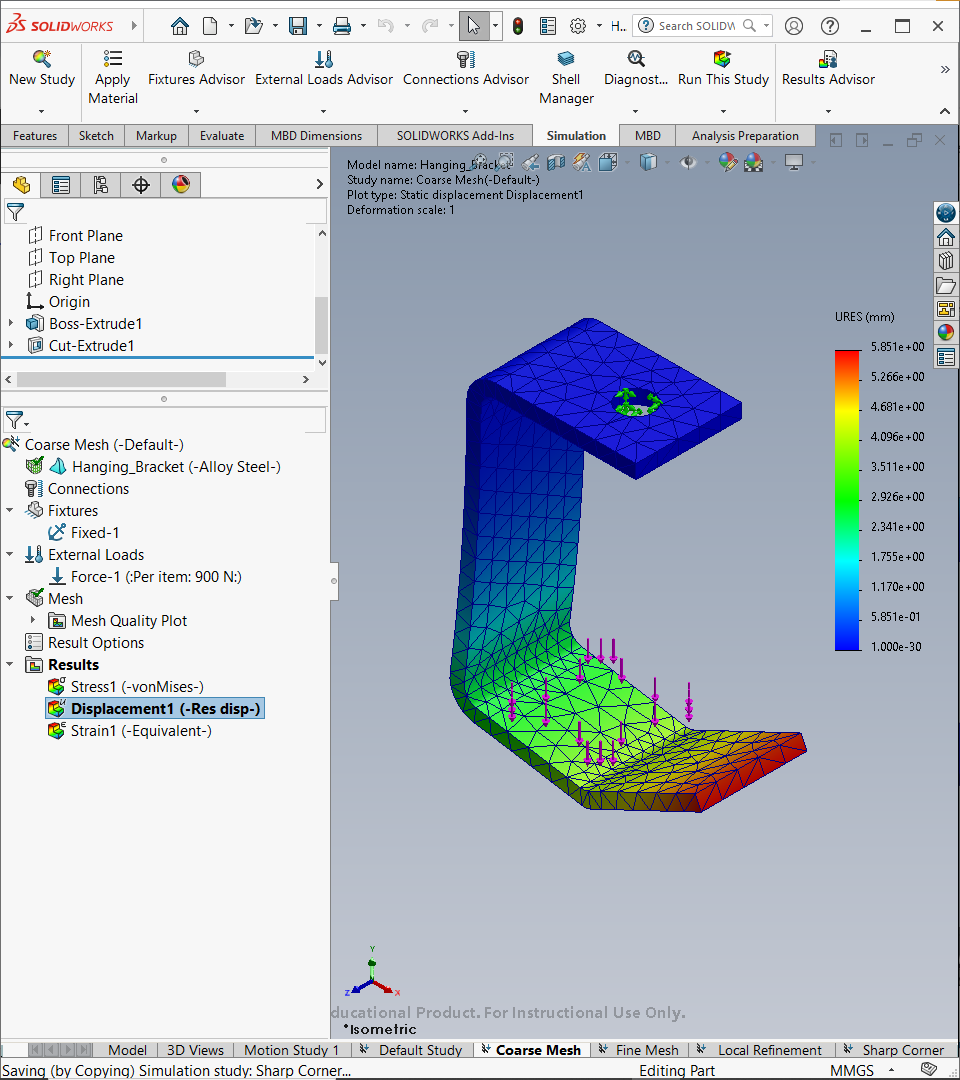
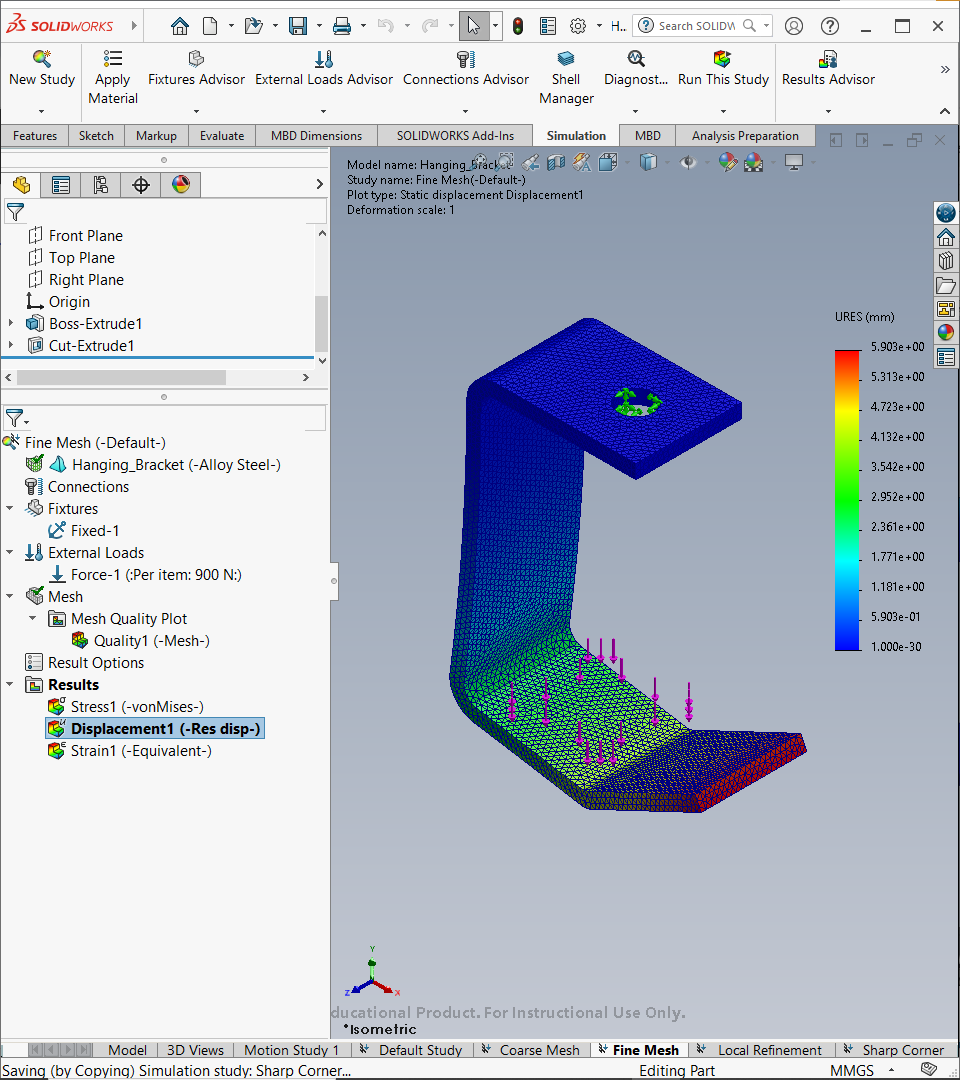
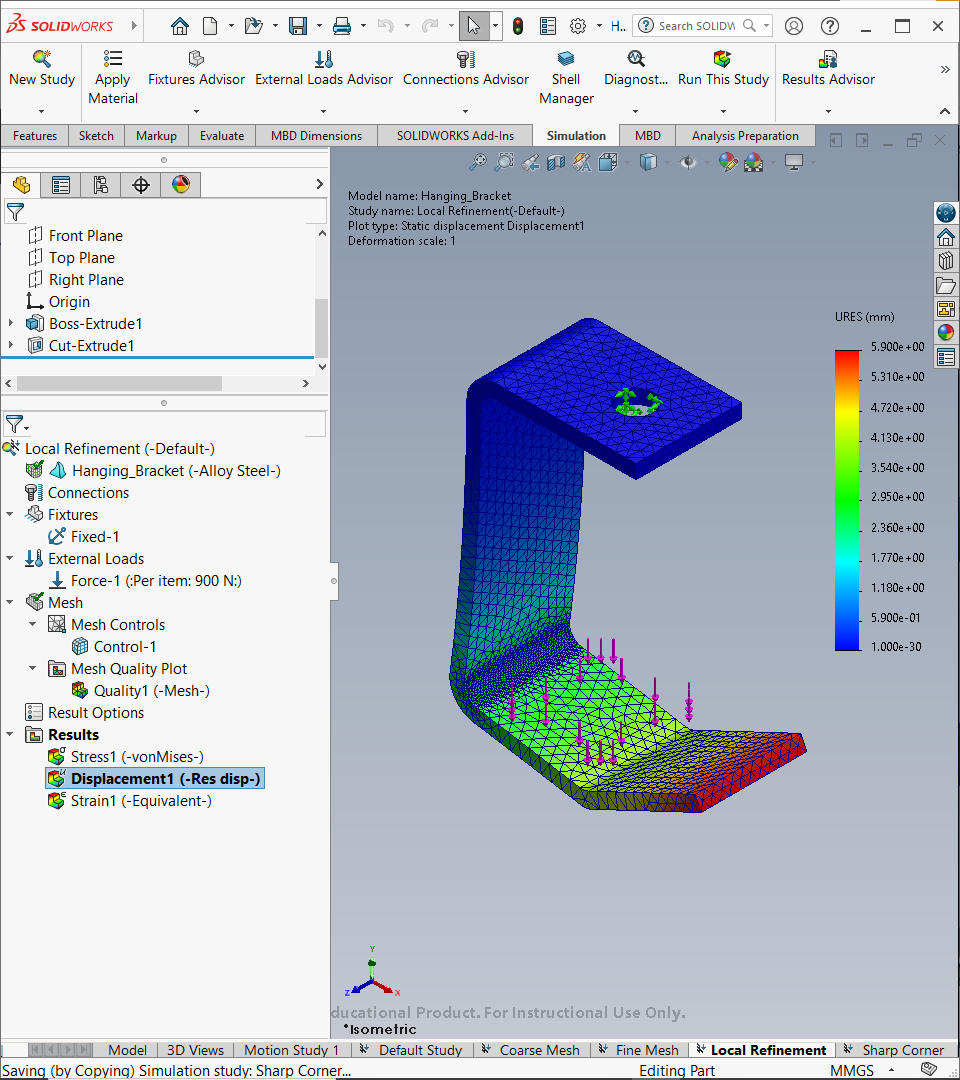
| Mesh size | Maximum displacement |
|---|---|
| Default | 5.894 mm |
| Coarse | 5.851 mm |
| Fine | 5.903 mm |
| Local refinement | 5.900 mm |
Total computation time vs. accuracy
| Mesh size | Meshing time | Solution time | Total time | Accuracy |
|---|---|---|---|---|
| Default | 3 seconds | 9 seconds | 12 seconds | Medium |
| Coarse | 3 seconds | 2 seconds | 5 seconds | Low |
| Fine | 4 seconds | 55 seconds | 59 seconds | High |
| Local refinement | 12 seconds | 15 seconds | 27 seconds | Highest |
The local refinement study delivered the highest accuracy using less than half the total computation time of the fine mesh study. While implementing the mesh control required extra initial setup time, this example highlights the significant efficiency gains possible when analyzing complex parts and large assemblies.
Source
- MySolidWorks Training
- Learning Path: SW Simulations
This content (including the analysis setup, simulation execution, and all resulting visual content—screenshots and videos) was individually performed and generated by me in SolidWorks Simulation, utilizing a combination of custom and existing parts provided by SolidWorks as guided by the MySolidWorks Training curriculum.
 Chris Wachter | Portfolio