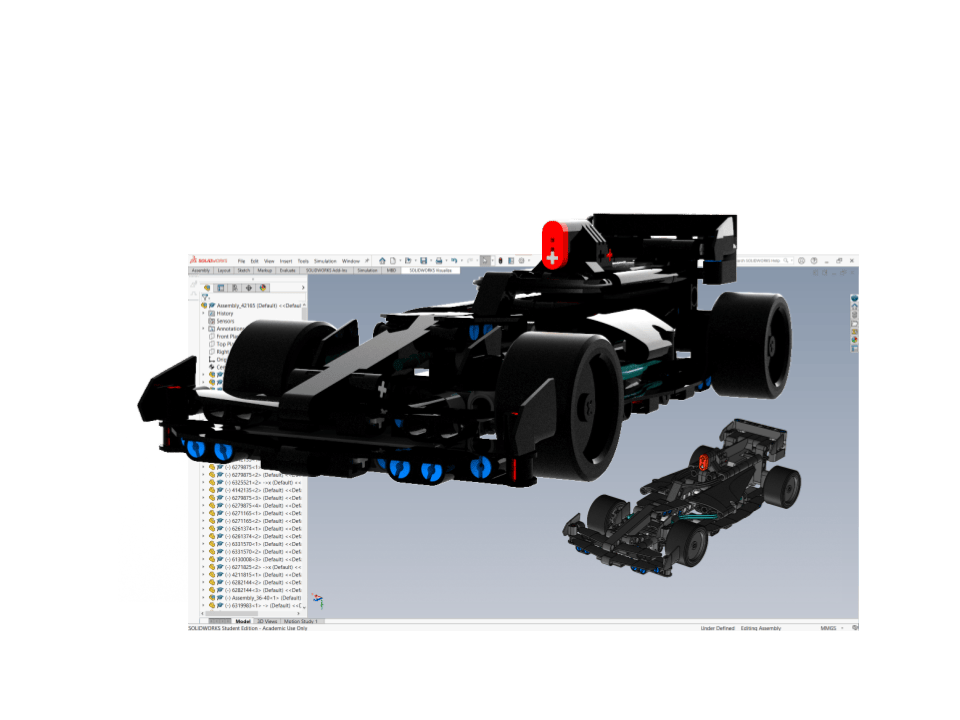
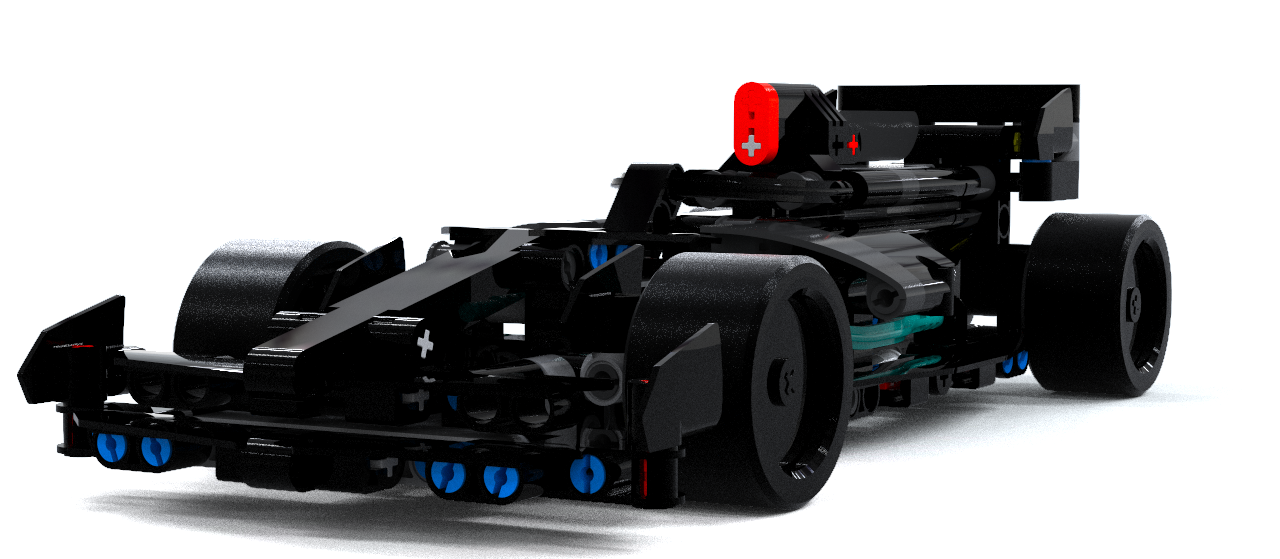
This project is a close digital approximation of a 240-piece LEGO Technic F1 car model. When creating individual CAD files of each piece, I relied heavily on photos from the official LEGO parts catalog and took direct measurements from the physical model to determine the correct sketch geometry and dimensions prior to assembly.
I modeled every component without relying on existing CAD files, simplifying geometry where possible, while ensuring the components assembled without interference and upheld the design intent.
Assembly
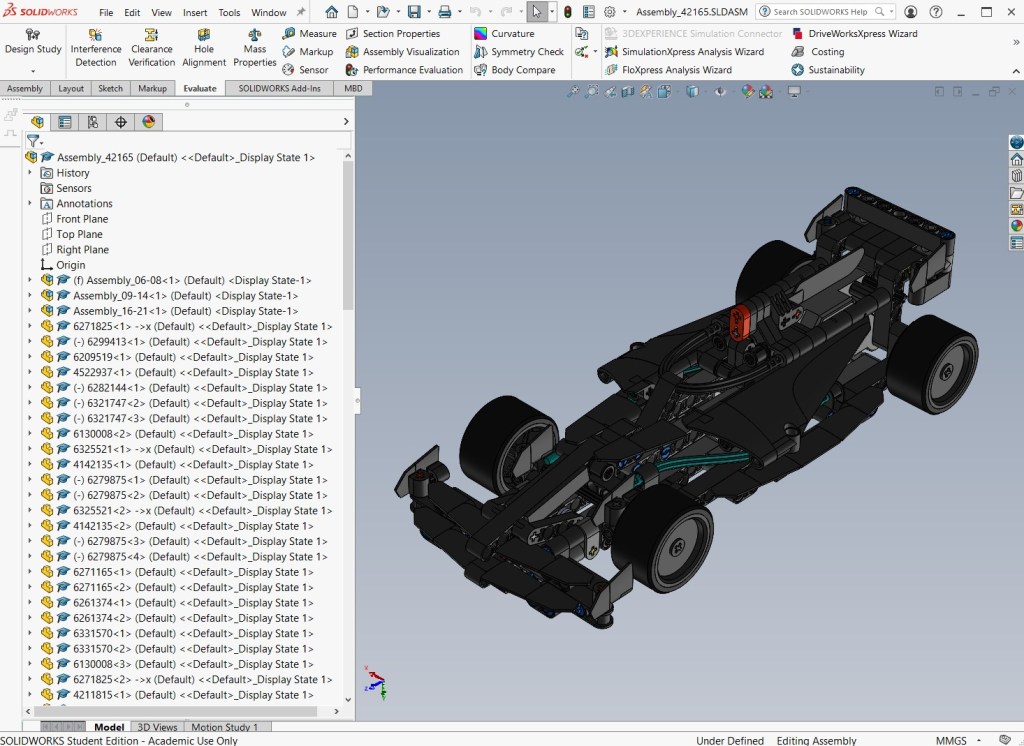
Assembling the virtual model after the parts were created in SolidWorks was a straightforward, albeit lengthy, process. This was possible largely due to the excellent building instructions provided with the set, which allowed me to assemble the virtual parts and create the necessary subassemblies in the same order as the real-world model.
Technical drawings
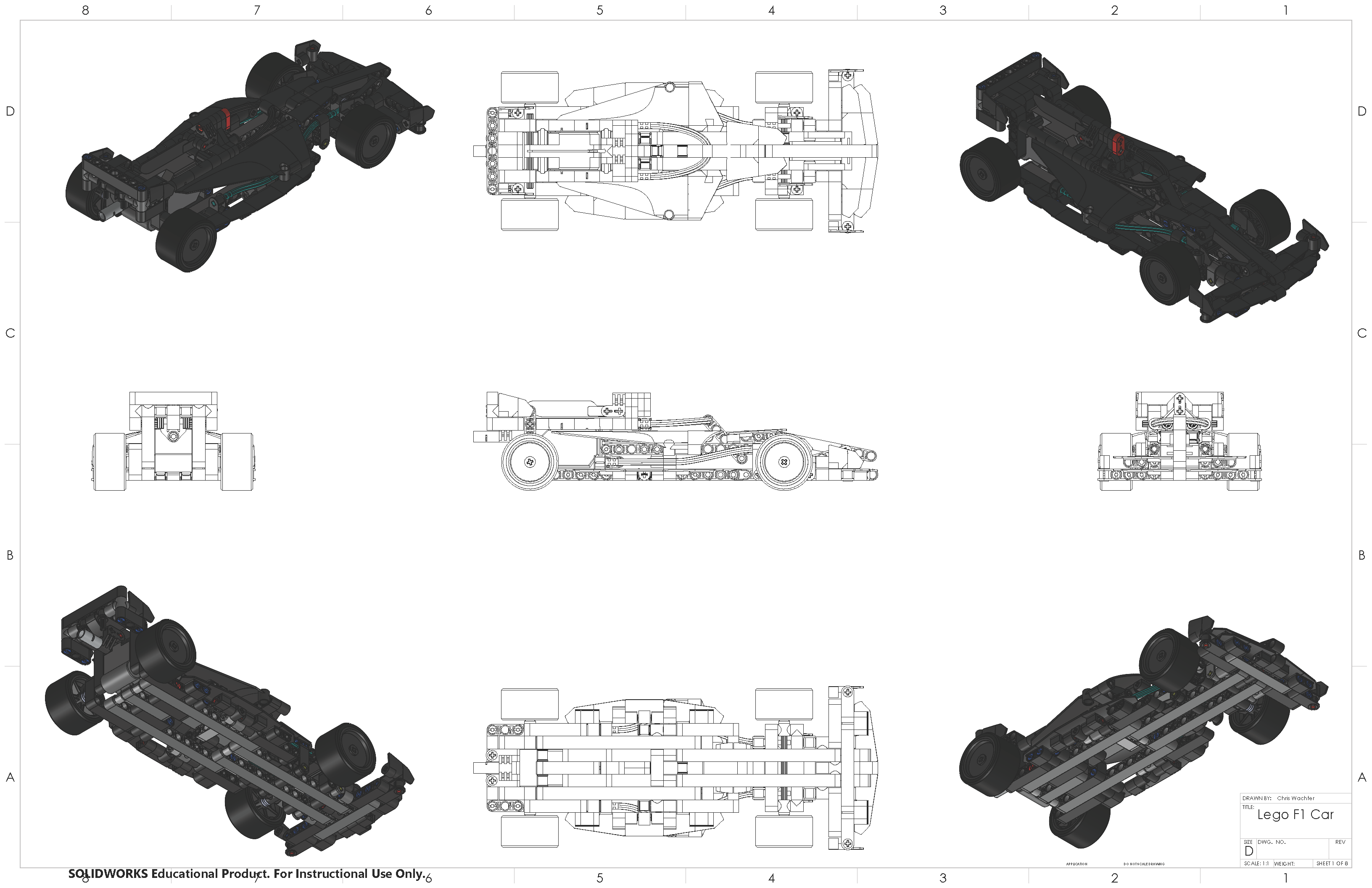
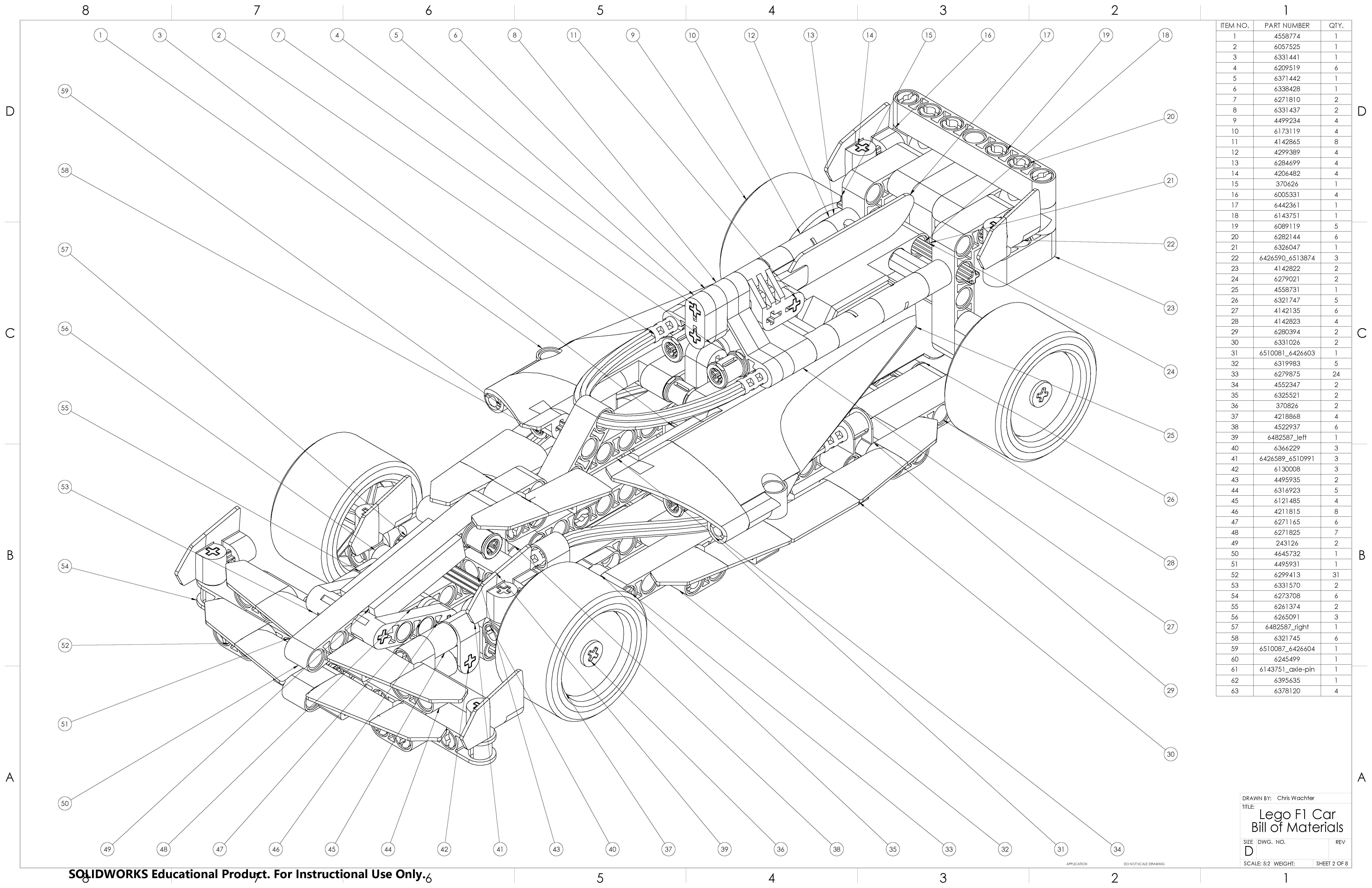
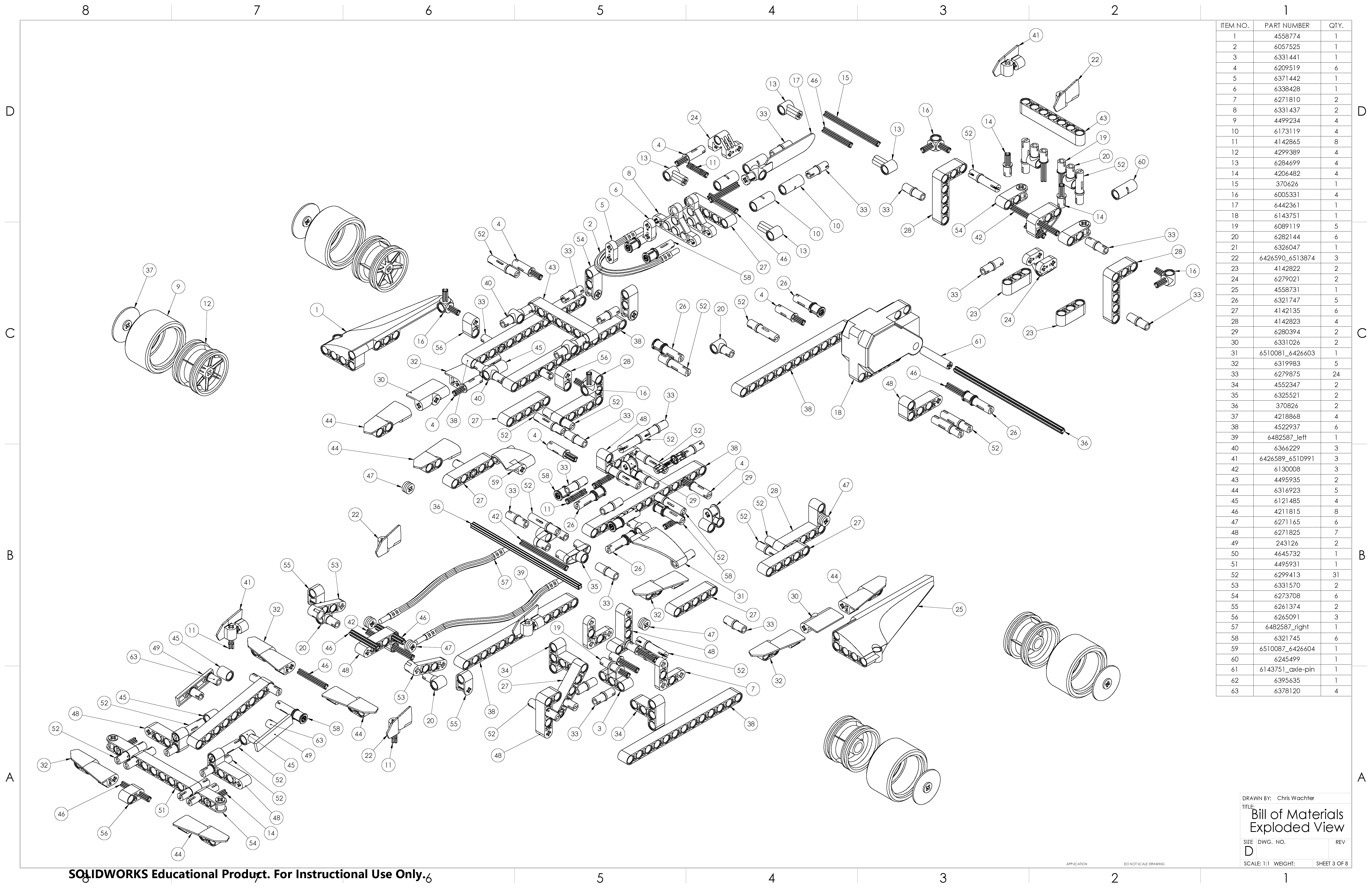
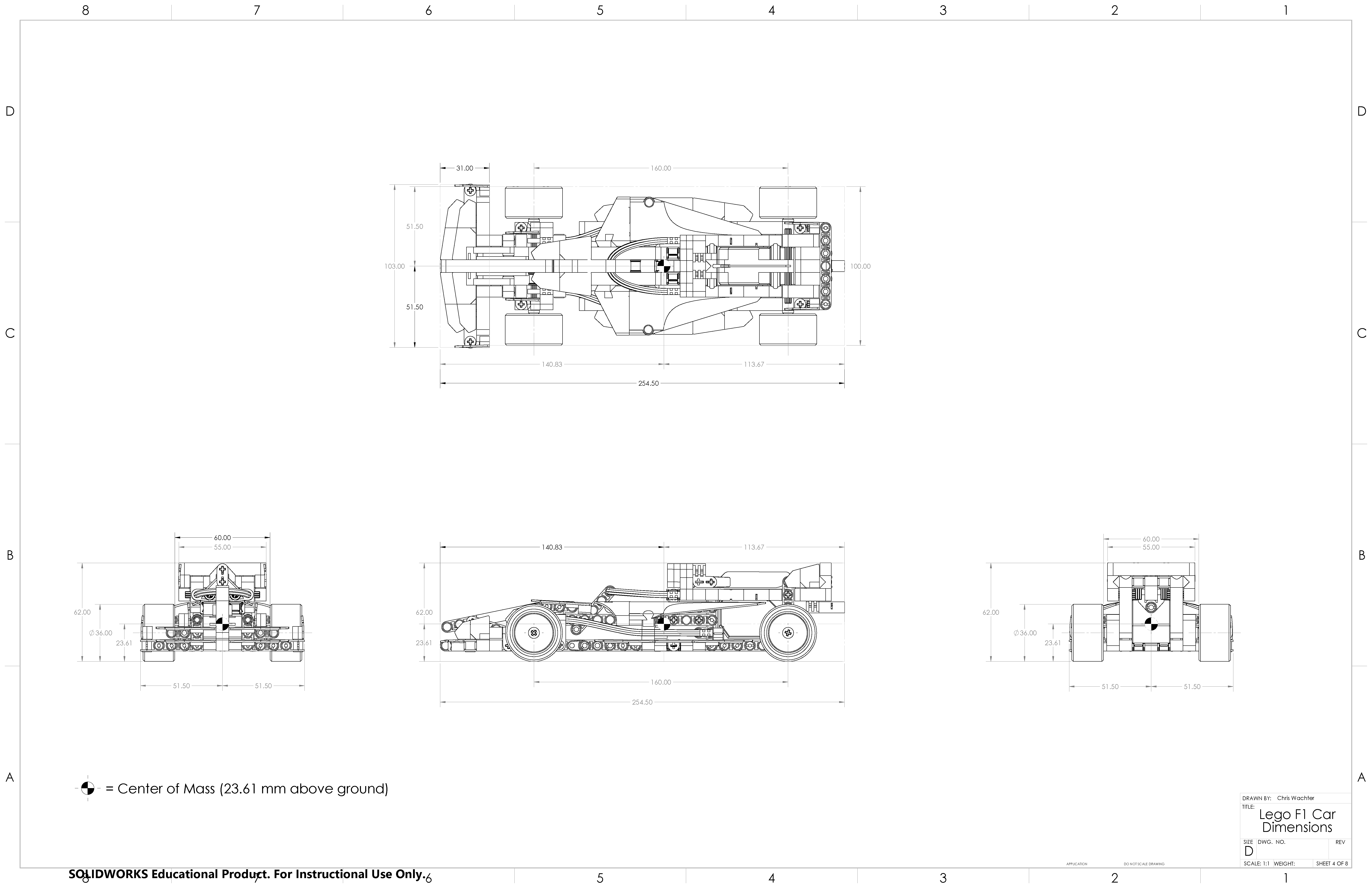
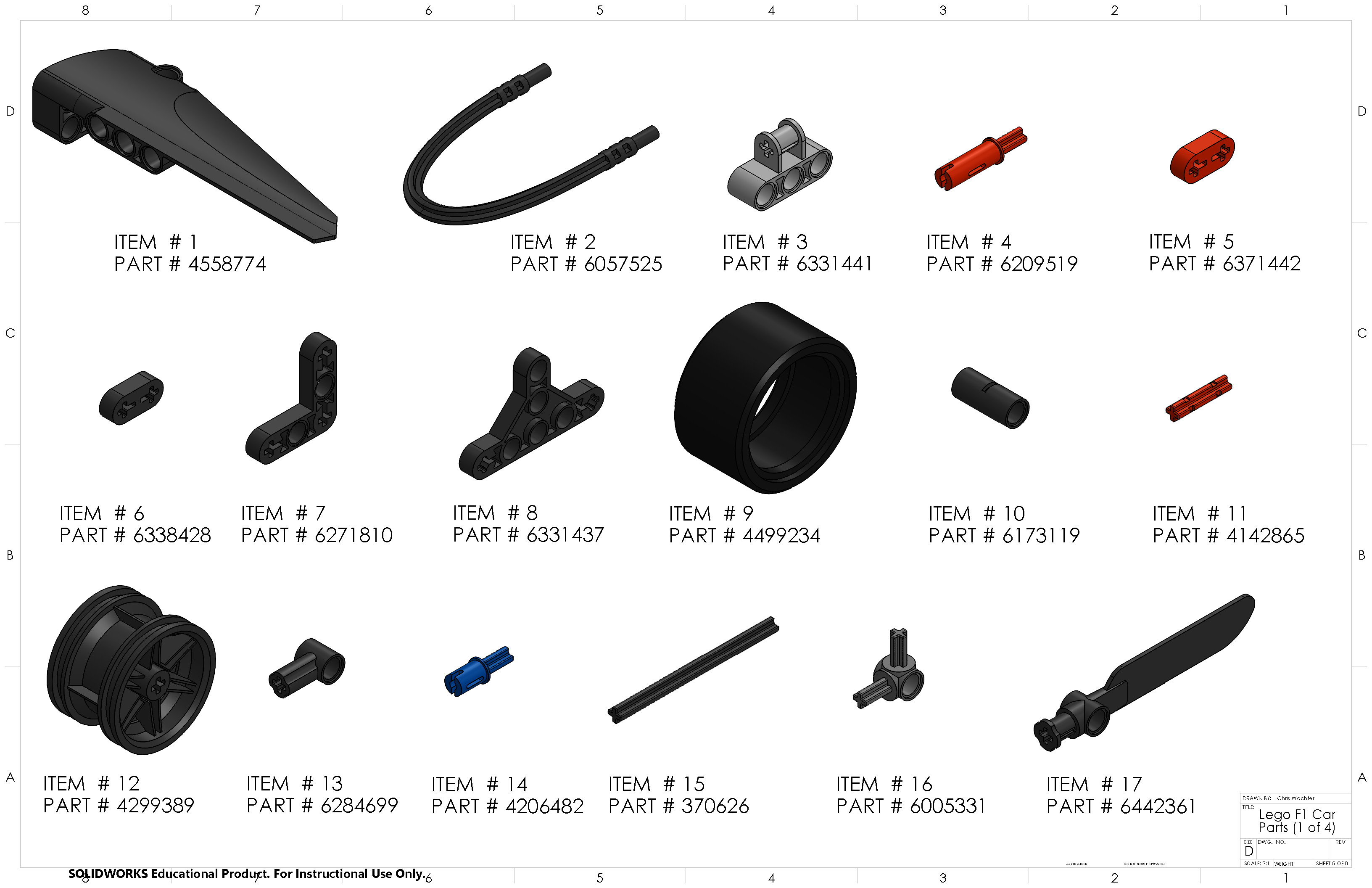
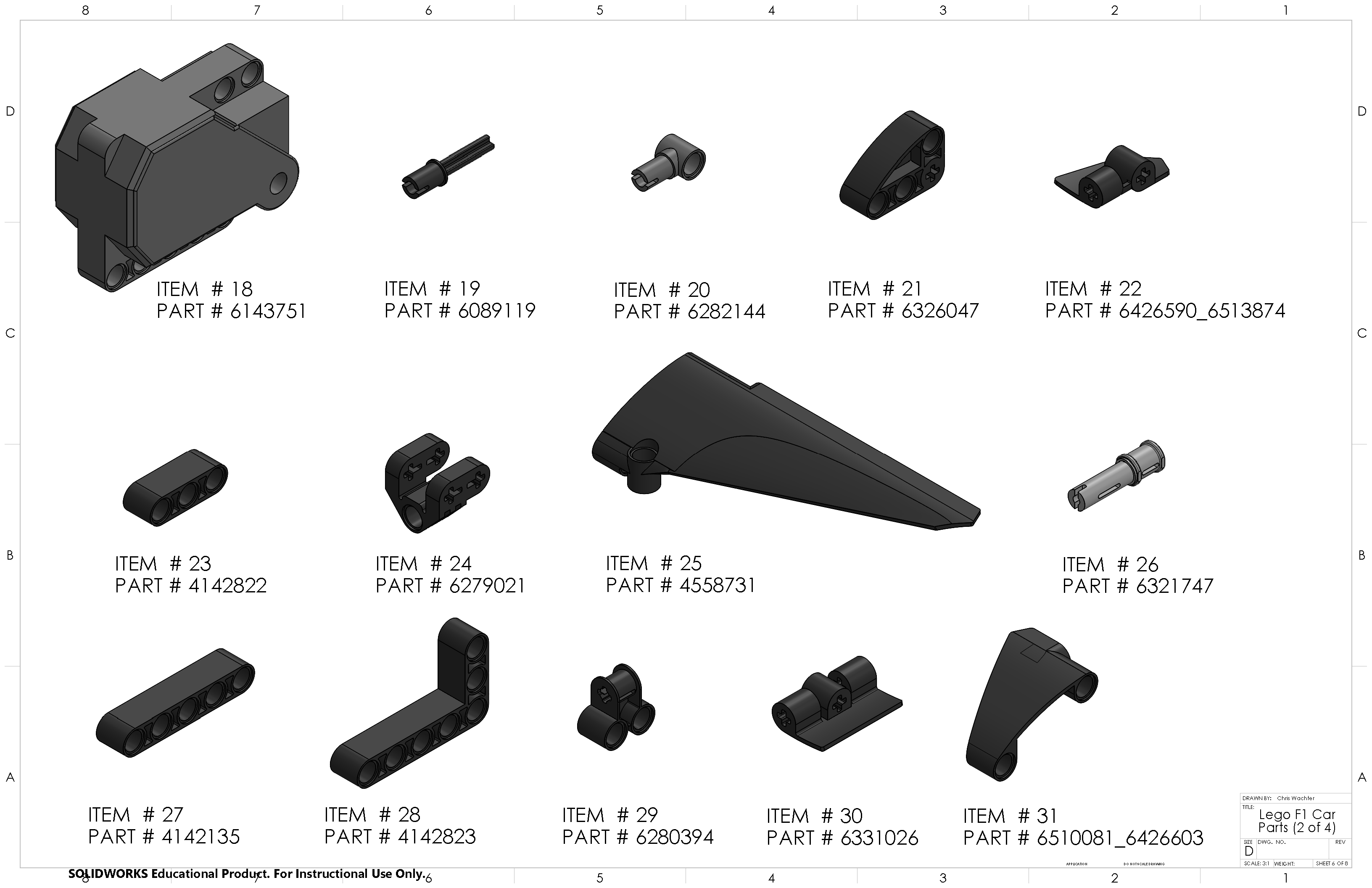
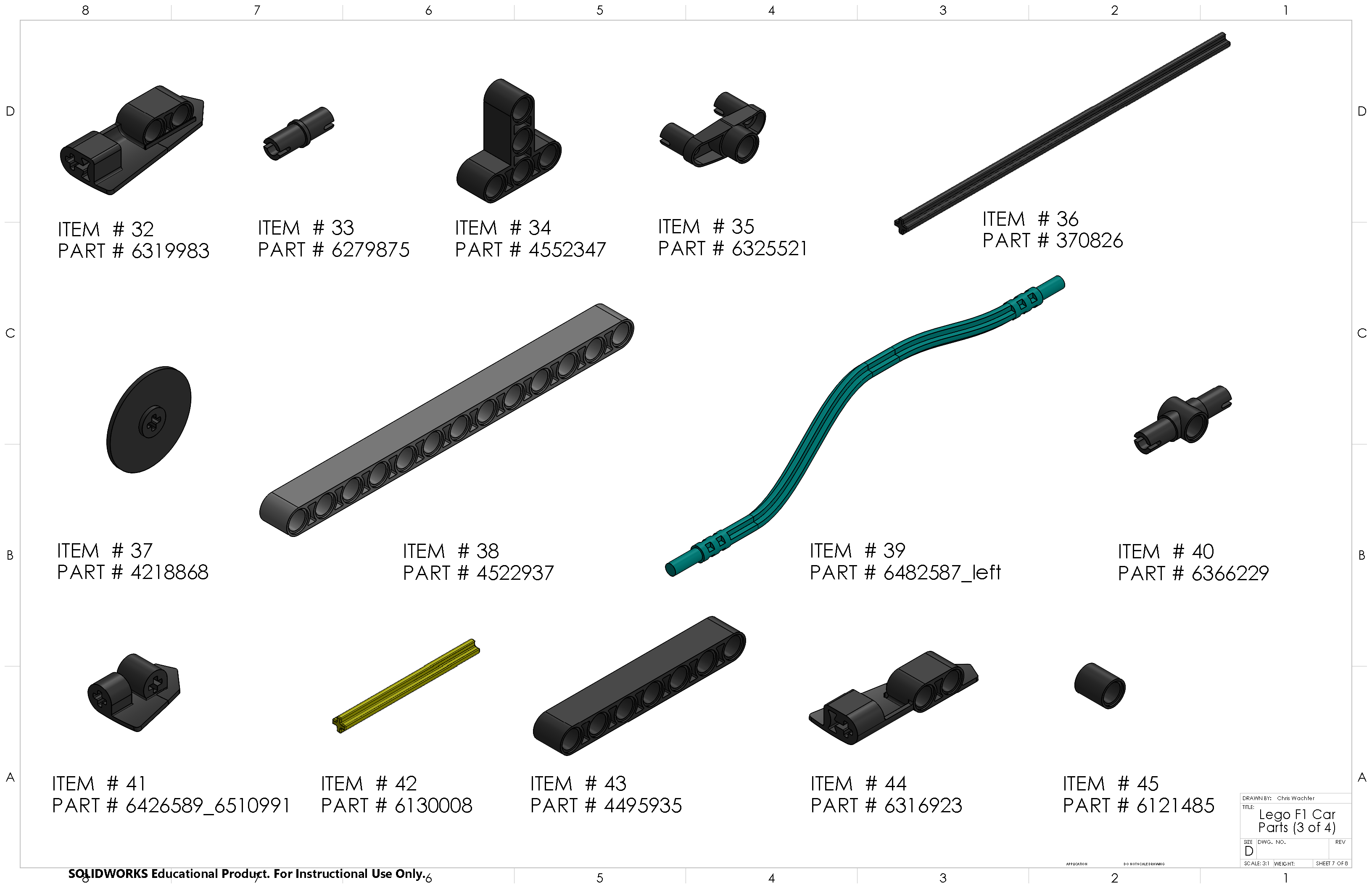
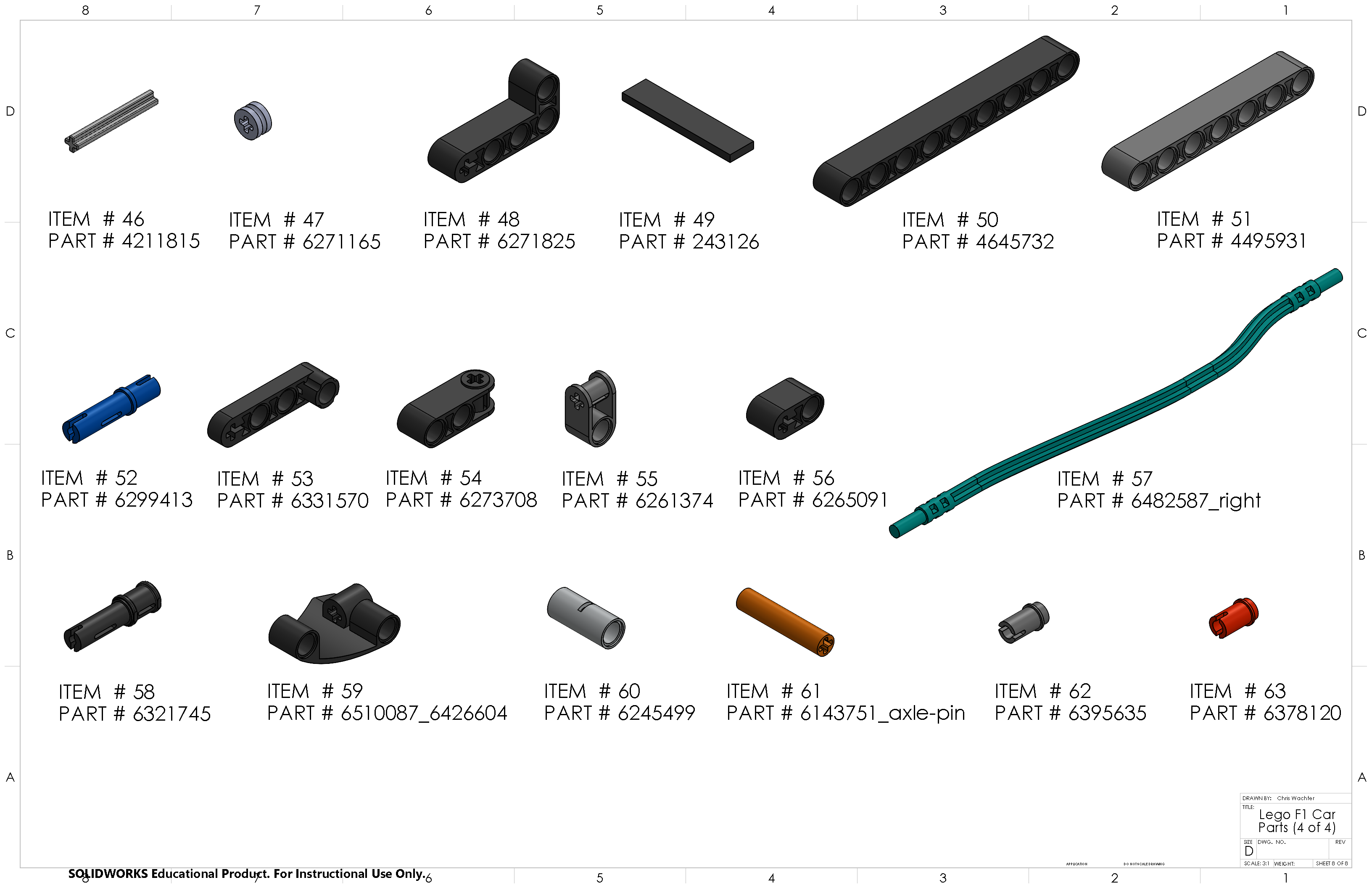
Click on images to expand
These drawings document the approximate reconstructed geometry of the LEGO model but are not full manufacturing blueprints.
Creating a single bill of materials for 63 unique parts (240 pieces total) highlights a key challenge in technical communication: How do you label and present every component on a limited page area to produce clear, accurate, and comprehensible manufacturing documentation?
In professional use, companies like LEGO rely on Product Data Management (PDM) systems to manage inventory and documentation efficiently.

